A powerhead that’s wrong for your home shows up fast: a roll that stalls in thick carpet, a head that won’t spin at all, or hair wound around the roller by week two.
What is the best central vacuum powerhead for your home? It’s the one that suits your flooring, runs on your hose, and matches your system’s suction. Start with your situation, then check compatibility.
What Makes the Best Central Vacuum Powerhead
The best central vacuum powerhead is the one that matches your floors, your hose, and your system’s suction. Look for steady brush roll agitation, a cleaning path that suits your rooms, adjustable height, and a belt and roller you can replace. No single model wins everywhere.
Here’s what to weigh, in rough order of importance:
- Brush roll agitation: The roll loosens embedded dirt and hair so suction can carry it away. Electric heads spin the roll with a motor, while air-driven heads spin it with airflow.
- Cleaning path width: Widths commonly run from about 12 to 14 inches. A wider head covers more floor per pass, and a narrower one steers around furniture more easily.
- Height adjustment: It lets one head handle low and high pile. Some product listings mention up to five height settings.
- Headlight: Handy under beds and sofas. It’s a nice extra, not a deciding factor.
- Belt and roller durability: Look for a replaceable belt and brush roll. Some models are listed with metal roller brushes, which buyers often choose for durability, so read each product’s details.
- Hose compatibility: An electric head needs an electric hose or a pigtail cord. An air-driven head runs on a standard hose.
- Match to your system’s suction: A strong head can’t make up for a weak unit, and a weak unit can leave an air-driven head turning slowly.
This guide doesn’t crown a winner, because floors, pets, and systems differ. It helps you pick the right type for your situation instead.
Which Central Vacuum Powerhead Fits Your Situation?
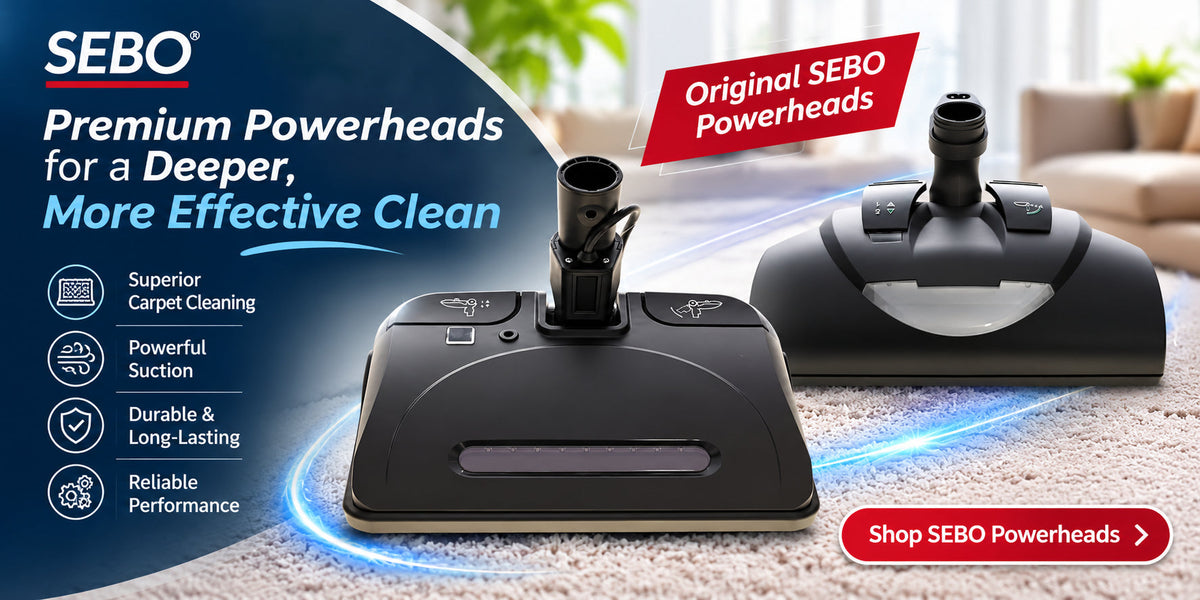
Start with the scenario that sounds most like your home. The central vacuum power heads collection includes electric and air-driven options from brands such as Beam, H-P Products, Johnny Vac, SEBO, VPC, and Wessel Werk. See current prices and availability on the collection page.
Pet owners
Go electric. A motor-driven brush roll keeps its speed through dense hair, where a gentler air-driven head can slow down.
Expect hair wrap. Cut it off the roll every few weeks, because wrapped hair strains the belt and bearings. A handheld tool for furniture and stairs rounds out the setup.
Thick carpet
Go electric, with adjustable height. Deep pile needs consistent agitation, and a height setting lets the roll reach the fibres without bogging down.
Shaggy rugs with long fringe can tangle a spinning roll. Lift the head or switch to a floor tool on those.
Mixed flooring
Go electric with height adjustment, and add a floor brush. One head can cover carpet and rugs, but a spinning brush roll can scatter grit on hardwood and tile. A soft-bristle floor brush from the floor and carpet tools collection handles the bare floors.
If you move between surfaces often, an integrated telescopic wand cuts down on swapping parts.
Carpeted stairs
Go compact and air-driven. A full-size head is awkward on a stair tread. A small turbine tool is light, has no cord, and reaches into corners.
Check your system’s airflow first, since a turbine needs it to spin. Browse the accessory kits and floor tools for compact options.
An older or lower-power system
Lean electric. An electric head spins by motor, so it doesn’t depend on airflow to run. Air-driven heads can turn slowly on small units, long tubing runs, or systems with many bends.
Your system still has to pull the dirt away. If suction is weak across the whole house, a new power unit may help more than any head.
Replacing a worn-out powerhead
Match what you have first. Note whether your current head is electric or air-driven, how it connects, and whether it uses a separate wand. Then choose a head with the same connection, or upgrade the features that annoyed you, such as height adjustment or a headlight.
|
Scenario |
Best-fit type |
What to look for |
Watch-outs |
|---|---|---|---|
|
Pet owners |
Electric |
Replaceable brush roll and belt, easy access to the roll |
Hair wrap: clean the roll regularly. |
|
Thick carpet |
Electric |
Adjustable height, durable roller |
Fringed or shaggy rugs can tangle. |
|
Mixed flooring |
Electric floor brush |
Height adjustment, optional integrated wand |
A spinning brush can scatter grit on hard floors. |
|
Carpeted stairs |
Compact air-driven tool |
Lightweight, small cleaning path |
Needs adequate airflow |
|
Older or low-power system |
Electric |
Motor-driven roll, hose compatibility |
Needs electric hose or pigtail; suction still matters. |
|
Replacing a worn head |
Same type as the old one |
Matching connection, replaceable parts |
Verify compatibility before ordering. |
Powerhead for Central Vacuum System: Compatibility Checklist
A powerhead for central vacuum system use must match your hose and inlets before anything else. Electric heads need an electric hose or a pigtail cord, while air-driven heads run on a standard hose and enough airflow. Confirm the 1¼-inch fitting, your wand, and your unit’s suction before you order.
Work through this list in order:
- Inlet type: Low-voltage inlets only signal the system to start. Electric inlets are wired to household power and can supply an electric head directly.
- Hose type: A standard low-voltage hose works with air-driven heads. An electric hose powers an electric head through the hose. A pigtail hose adds a cord that plugs into a nearby outlet, which helps when your inlets are low-voltage only. Browse central vacuum hoses to see the styles.
- Fittings: Most central vacuum tools use 1¼-inch fittings, though cuffs and connectors vary by brand.
- Wand pairing: Some heads include an integrated telescopic wand, while others attach to a separate one. If you need a wand, see the wands collection.
- Airflow for air-driven heads: The turbine needs air to spin. Small units and long tubing runs reduce airflow at the inlet.
- Your power unit: Check its airflow and suction ratings against the head you’re considering.
Common mistake: Ordering an electric head for a system with only low-voltage inlets and no pigtail option. Check your inlet plates and hose cuff first.
Still unsure? Call 1-855-825-7784 and describe your hose and inlets. It’s faster than guessing.
When to Repair vs. Replace Your Powerhead
Most powerhead problems are cheap to fix. A head is worth replacing when the damage is structural or the motor has failed.
Signs of wear
- Bristles worn flat or uneven
- A belt that’s stretched, cracked, or slipping
- Hair tightly wound around the roll
- A roll that spins slowly or not at all
- A burning smell or unusual noise
Quick troubleshooting
- Electric head not spinning: Check the power connection first, whether that’s the electric inlet or the pigtail plug. Then look for a snapped belt or a jammed roll.
- Air-driven head not spinning: Suspect weak airflow. Check for a full bag or canister, a dirty filter, or a clog in the hose or tubing.
- Loss of suction: Rule out the bag, filter, and hose before you blame the head.
Repair or replace?
Repair when the fix is a belt, a brush roll, or a hair-clogged roller. Replace when the motor has failed, the housing is cracked, or the swivel is loose, and the head no longer sits flat on the floor. If you replace it, take the chance to add the features you missed, like height adjustment.
Key Takeaways
- The best central vacuum powerhead depends on your floors, your pets, and your system.
- Electric suits, pets, thick carpet, and older or low-power systems. Air-driven suits stairs and light carpet.
- Use a floor brush on hardwood and tile.
- Check inlet type, hose type, fittings, and wand pairing before you order.
- Clean hair wraps and replace worn belts early.
- Replace the whole head only when the motor, housing, or swivel fails.
Frequently Asked Questions
What is the best powerhead for pet hair?
An electric powerhead is usually the better fit, because its motor-driven brush roll keeps spinning through dense hair. Choose one with a replaceable belt and brush roll, and plan to cut wrapped hair off the roll every few weeks.
Do I need an electric hose for a central vacuum powerhead?
Only for an electric powerhead. You’ll need an electric hose with electric inlets, or a standard hose with a pigtail cord. Air-driven heads work with a standard hose.
Will an air-driven powerhead work on my older central vacuum?
Possibly, but it depends on airflow. Small units, long tubing runs, and many bends can slow the turbine. If yours is an older or lower-power system, an electric head is often the safer choice.
Can one powerhead handle carpet and hardwood?
Some have height settings that help, but a spinning brush can scatter grit on hard floors. Most homes do best with a powerhead for carpet and a soft-bristle floor brush for bare floors.
Is a powerhead with a built-in wand worth it?
It can be, because it means fewer connections to swap. Just confirm the wand length and fit work for your height and your hose before you order.
Ready to Choose?
Browse the central vacuum power heads collection to compare electric and air-driven options. Orders over $99 ship free, and the best price guarantee has you covered.
Not sure what fits? Call 1-855-825-7784, and we’ll help you match a head to your system.


Leave a comment
This site is protected by hCaptcha and the hCaptcha Privacy Policy and Terms of Service apply.