Best Central Vacuum Systems in Canada: What Every Homeowner Needs to Know Before Buying
If you're tired of lugging a heavy portable vacuum from room to room — or battling the noise, dust recirculation, and limited suction that comes with it — a central vacuum system might be the single smartest upgrade you can make to your Canadian home in 2026.
Central vacuum systems (also called built-in vacuums or whole-home vacuum systems) have been quietly gaining ground in Canadian households for decades, and for good reason. They're quieter, far more powerful than most portable units, and virtually eliminate the allergy-triggering dust that conventional vacuums exhale back into your living space. But with so many brands, motor sizes, and accessories on the market, choosing the best central vacuum system for your home can feel overwhelming.
This guide breaks down everything you need to know — from how central vacuum systems work to what specs actually matter — so you can buy with confidence.
What Is a Central Vacuum System and How Does It Work?
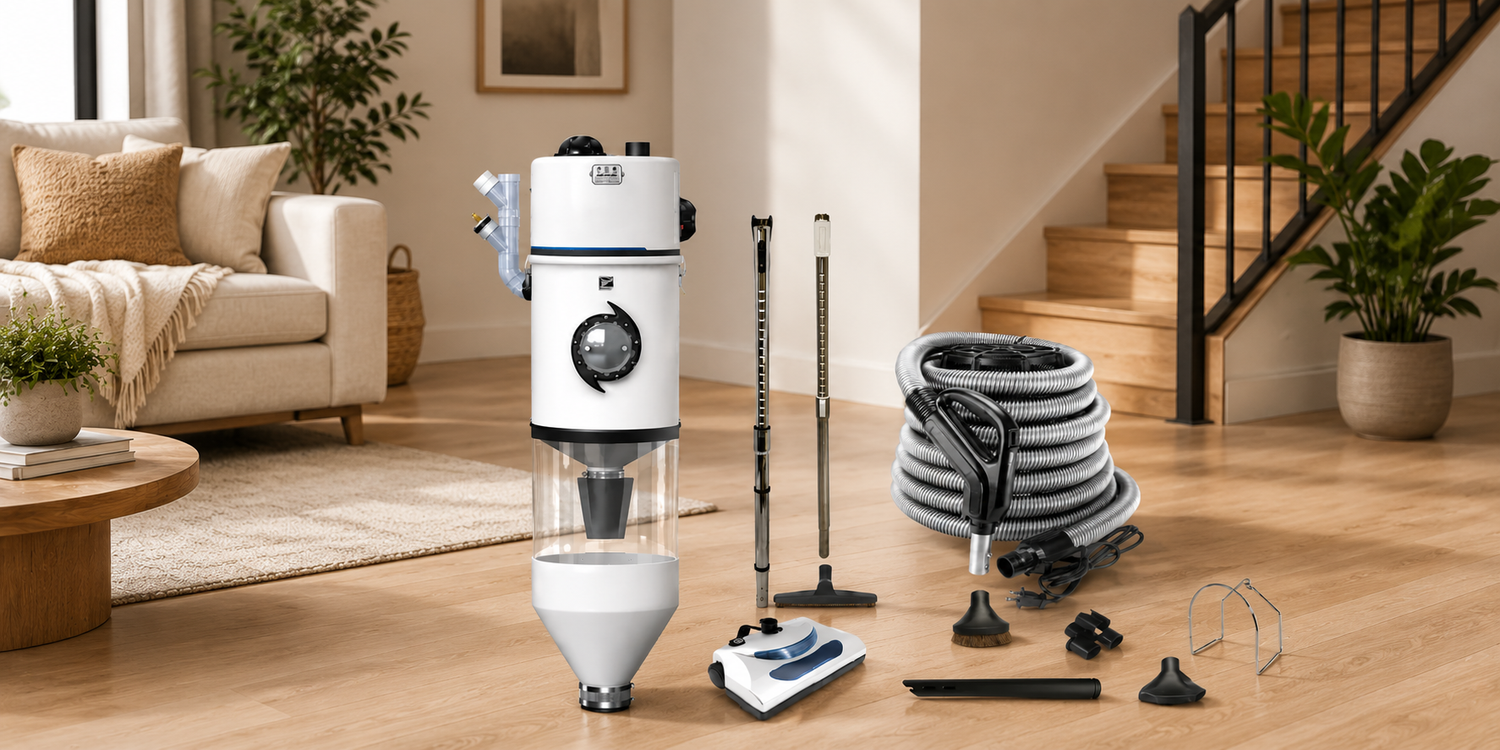
A central vacuum system consists of a large power unit permanently installed in your basement, garage, or utility room. Tubing runs through the walls of your home to inlet valves in each room. When you're ready to clean, you simply plug a lightweight hose into the nearest wall inlet, and the powerful motor pulls debris through the tubing and into the central collection unit—far away from your living area.
This setup means the dust, pet dander, and allergens you vacuum up are permanently removed from your home's air—not filtered and recirculated the way many portable vacuums do. The result is noticeably cleaner air and a significantly more comfortable home, especially for allergy and asthma sufferers.
Pro Tip: Central vacuum systems can increase a home's resale value by up to 10%, making them one of the few home-cleaning investments that actually pays back. If you're renovating or building new, it's the ideal time to install.
The 5 Real Benefits of a Central Vacuum System
Significantly More Suction
Central vacuum power units generate 3–5× more suction power than the average portable vacuum, handling deep-pile carpets, pet hair, and heavy debris with ease.
Dramatically Quieter
Because the motor is in a remote location, you can vacuum without disturbing sleeping children, pets, or people on the phone — a game changer.
Healthier Indoor Air
Unlike portable vacuums, a central system exhausts air outside the living area, removing allergens rather than recirculating them through a filter.
Adds to Home Value
A built-in system is a permanent home feature—it's a selling point that differentiates your property and is well-regarded by buyers across Canada.
Lighter to Use
You only carry a lightweight hose and attachment — no heavy machine to drag up and down stairs or around furniture.
Built to Last
Central vacuum systems are engineered for longevity. Most units last 20+ years with minimal maintenance — far outlasting portable vacuums.
What to Look for When Choosing the Best Central Vacuum System
Not all central vacuum systems are equal. Before you buy, these are the specifications that will actually determine whether a system performs well in your specific home.
1. Motor Power: Airwatts vs. Horsepower
The most meaningful performance metric is airwatts (AW), not horsepower. Airwatts measure both suction and airflow together—the real-world combination that picks up debris. For homes under 3,000 sq ft, look for a unit producing at least 500–600 AW. Larger homes above 5,000 sq ft benefit from 700 AW or more.
2. Filtration Type: Bagged vs. Bagless (Cyclonic)
| Type | How It Works | Best For | Maintenance |
|---|---|---|---|
| Bagged | Debris collects in a disposable bag with a secondary filter layer | Allergy sufferers, pet owners | Replace bag 1–2× per year; very low dust contact |
| Cyclonic (Bagless) | Spinning air separates debris from airflow into a canister | Large homes, high-debris usage | Empty canister a few times per year |
| Filtered (Open) | Debris collects in canister with foam/HEPA filter | Budget-conscious buyers | Empty and wash filter regularly |
3. Home Coverage Area
Every central vacuum power unit is rated for a maximum square footage. As a rule of thumb, always choose a unit rated 15–20% above your home's actual size to ensure consistent suction at every wall inlet, even when the hose is at its furthest point.
4. Number of Inlets
Plan for one inlet per 600–700 sq ft of living space, keeping in mind that a typical 30-foot hose should be able to reach every corner of the rooms around each inlet. Poorly placed inlets are one of the most common installation mistakes — always sketch your floor plan before planning the layout.
5. Hose and Accessory Options
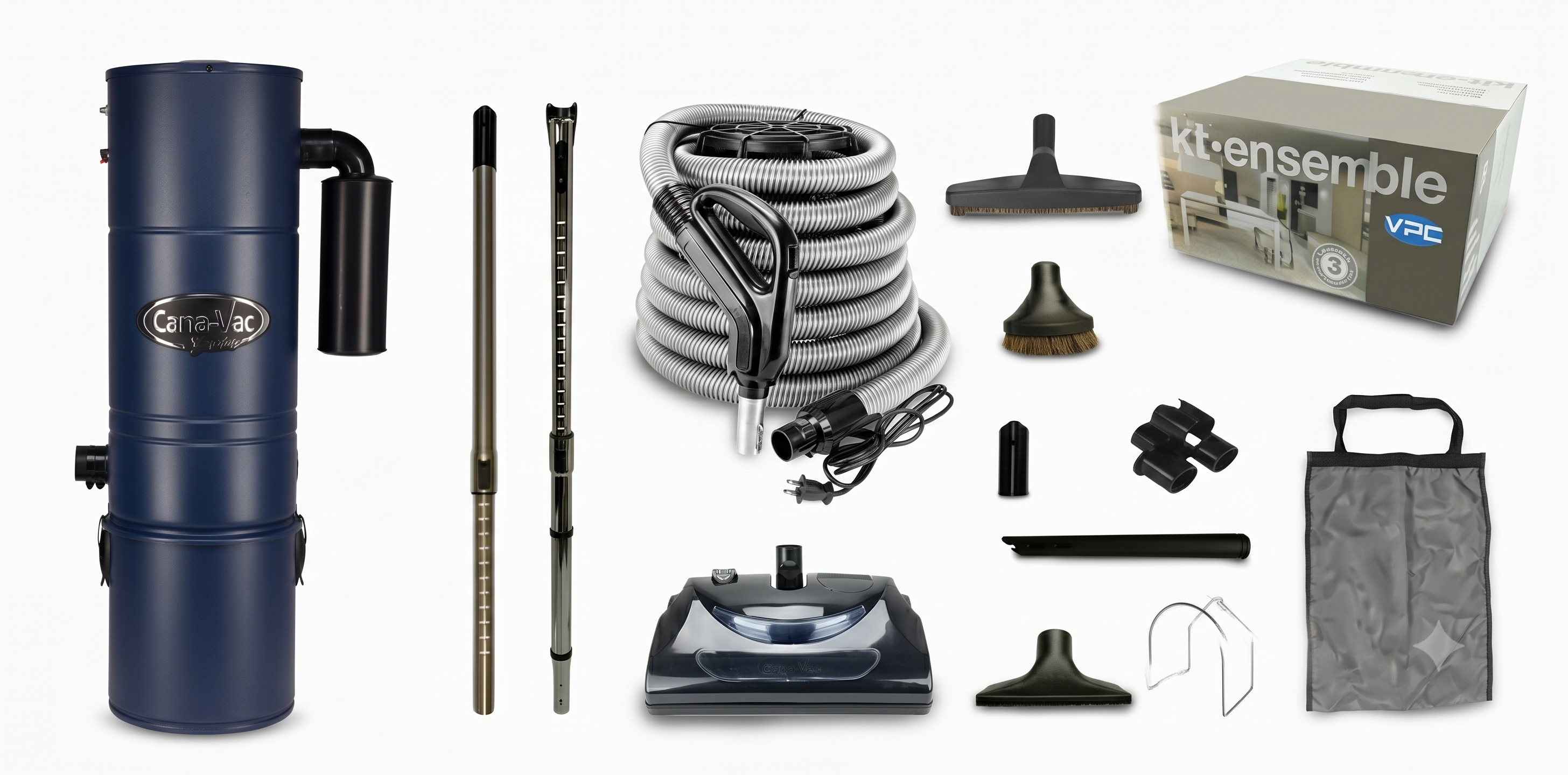
The hose and power head make or break your day-to-day cleaning experience. Look for systems that include a quality electric power head for deep carpet cleaning, a full swivel handle for ergonomic use, and enough attachment options for your specific surfaces—hardwood floors, upholstery, pet hair, and garage use all benefit from different tools.
If you want the ultimate convenience, a Hide-A-Hose retractable hose system eliminates storing the hose entirely—it retracts directly into the wall.
Top Central Vacuum Brands Available in Canada
Canada's climate—long winters, heavy pet seasons, and high dust accumulation in sealed homes—demands reliable, powerful systems.
CanaVac — Canada's Home-Grown Standard
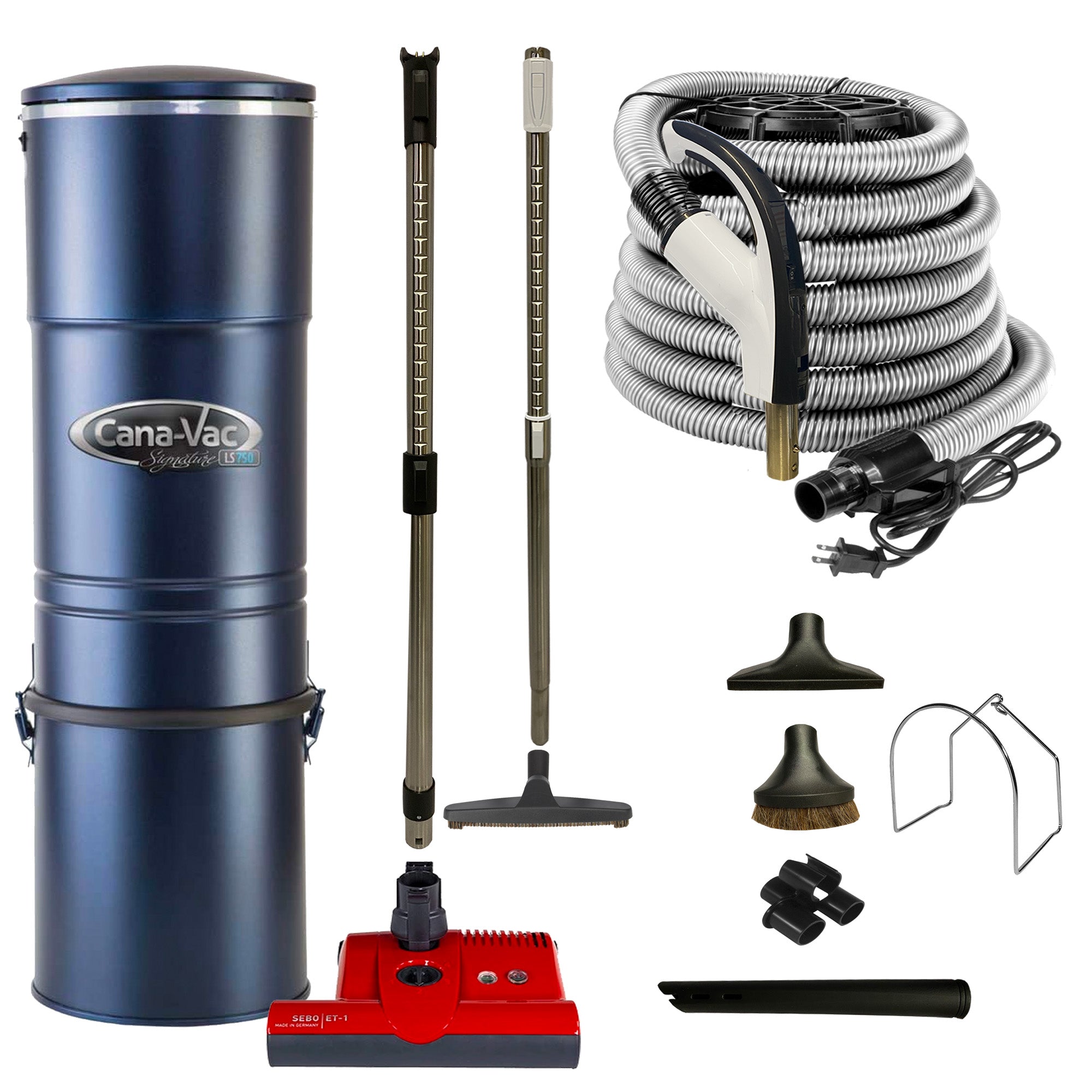
CanaVac is arguably the most trusted name in Canadian central vacuum systems, and for good reason. Built specifically for Canadian homes, CanaVac units are known for their quiet operation, robust build quality, and excellent suction across a wide range of square footages.
The CanaVac Signature Series is a flagship option for homes up to 10,000 sq ft, making it suitable for both large family homes and acreages. These central vacuum power units are consistently praised for lasting decades with minimal servicing.
DuoVac — Performance-Driven Engineering
DuoVac central vacuum systems are built with performance at the forefront. Their two-motor design options produce exceptional suction, making them popular with homeowners who have large floor areas, multiple pets, or significant carpeting. DuoVac units also work seamlessly with SEBO power heads for premium carpet cleaning results.
Cyclovac — European Precision, Canadian Availability
Cyclovac is a Québec-based manufacturer known for quiet motors and sleek design. Their cyclonic filtration models are particularly well-regarded by buyers who prefer bagless operation without sacrificing suction. Cyclovac systems are a popular choice for new construction and high-end home builds across Canada.
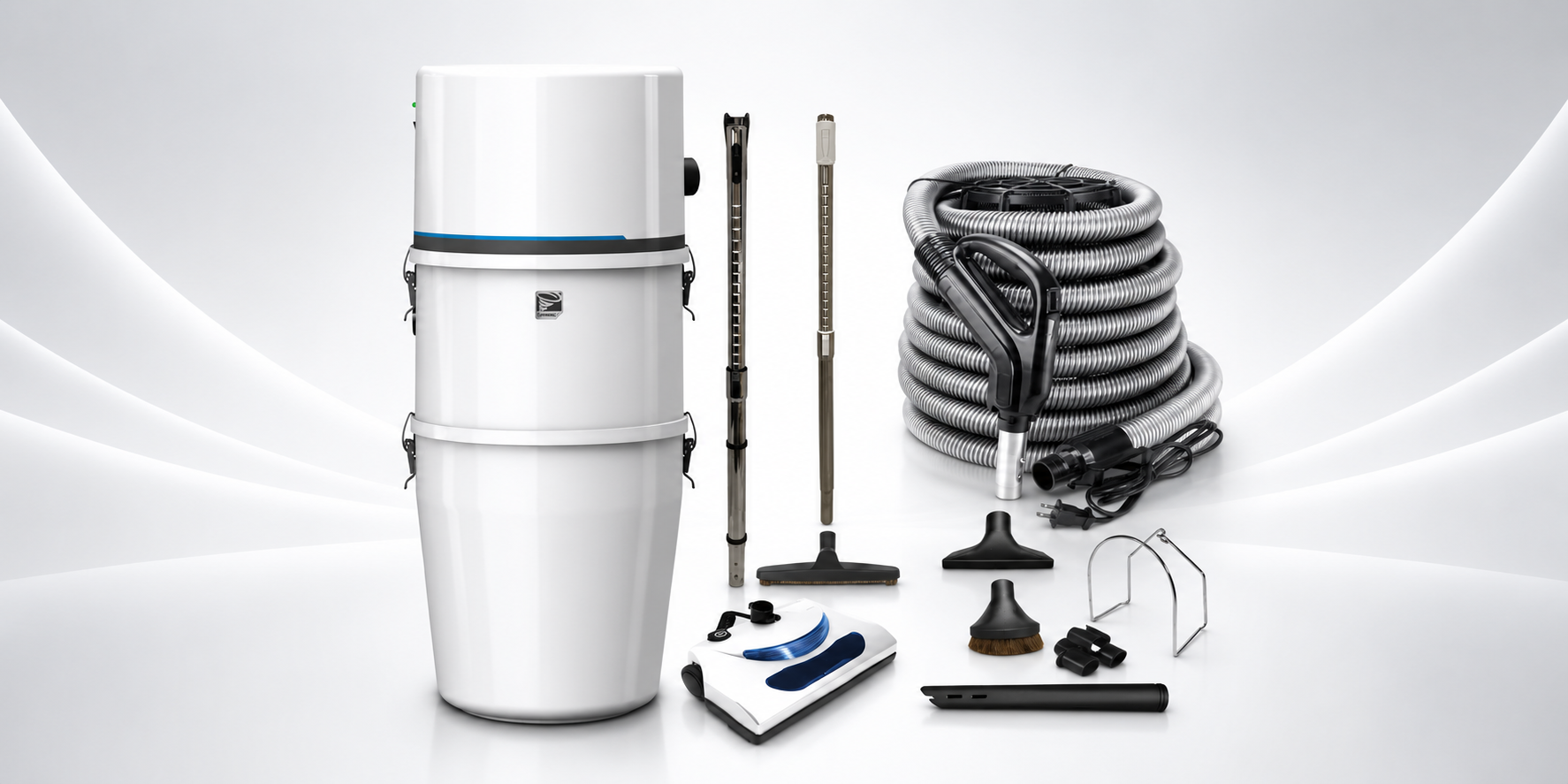
Worth Knowing: Complete central vacuum packages often bundle the power unit, hose, powerhead, and attachment kit—usually at a significantly better value than buying components separately, while also ensuring full compatibility between parts.
Central Vacuum System Buying Checklist
Use this checklist before you commit to any central vacuum system purchase:
-
Measured your home's square footage and matched it to the correct power unit coverage rating
-
Decided between bagged, cyclonic, or filtered filtration based on your allergy and maintenance preferences
-
Planned wall inlet placement to ensure full coverage with a 30-foot hose
-
Chosen a power head suited to your primary flooring type (carpet vs. hardwood)
-
Considered whether a retractable hose system makes sense for your layout
-
Factored in garage or workshop use, which may require a separate utility kit
-
Confirmed the system includes or is compatible with low-voltage or on/off switch wiring
-
Checked what's included in the warranty and whether local service is available
Whole-Home Package vs. Individual Components: Which Is Smarter?
For most homeowners buying their first central vacuum system, a complete package is the clear choice. Packages are designed by the manufacturer so every component — power unit, hose, power head, wands, and attachments — works together seamlessly and is guaranteed compatible. You avoid the guesswork of matching voltage ratings, connector types, and suction specifications across separate purchases.
Buying individual components makes more sense if you're upgrading an existing system—for example, replacing an aging power head, adding a Hide-A-Hose inlet, or swapping to a more ergonomic hose with a swivel handle.
Installation: DIY or Professional?
Central vacuum installation is one of those projects that sits right at the edge of the confident DIYer's skill set. For new construction or a home undergoing renovation, running the tubing through open wall cavities before drywall is relatively straightforward — even for first-timers.
For finished homes, professional installation is often worthwhile. Running tubing through finished walls requires cutting, patching, and careful routing—mistakes here can be expensive. That said, many homeowners with some renovation experience tackle it successfully with the right planning and the correct materials.
Installation Tip: Always start with a floor plan and map your tubing route before purchasing any installation materials. Plan your pipe runs along the shortest possible paths, and always position your power unit in a location with good exhaust ventilation — typically a garage wall, utility room, or basement exterior wall.
Maintenance: What to Expect Over Time
One of the most underrated advantages of central vacuum systems is how little ongoing maintenance they actually need. For bagged systems, you'll typically replace the bag once or twice a year depending on household size and use. Cyclonic and filtered systems need their canisters emptied a few times annually.
Beyond that:
-
Inspect and clean or replace the motor filter annually
-
Check inlet valves for stuck debris once or twice a year
-
Inspect the hose for cracks, especially near the connector ends
-
Keep the power head's roller brush clear of wrapped hair and thread
-
Empty the canister before it reaches the maximum fill line to maintain suction
With basic care, a quality central vacuum system will easily outlast any portable vacuum you own—most Canadian homeowners report using the same system for 15 to 25 years before any significant service is needed.
Frequently Asked Questions About Central Vacuum Systems
Can a central vacuum system be installed in any home?
Yes. While installation is easiest in new construction or during renovation, central vacuum systems can be retrofitted into virtually any existing home. The process is more involved in finished spaces, but experienced installers can route tubing through walls, floors, and ceilings with minimal disruption.
How much does a central vacuum system cost in Canada?
Entry-level complete packages for smaller homes typically start around $700–$900. Mid-range systems for 3,000–5,000 sq ft homes commonly range from $1,000 to $1,500. Premium systems with top-tier power heads and accessories for large homes can reach $2,000–$3,000+. Professional installation typically adds $500–$1,500 depending on your home's layout and the complexity of tubing runs.
Are all central vacuum hoses compatible with all systems?
Most modern central vacuum systems use a standard 1.5-inch inlet connection, making hoses broadly compatible across brands. However, low-voltage control wiring (for on/off hose switches) must match your power unit's wiring. When in doubt, look for hoses and accessories labelled “fits all brands.”
What's a Hide-A-Hose system, and is it worth it?
A Hide-A-Hose retractable central vacuum system stores the hose inside the wall inlet tubing itself. When you need to vacuum, you pull the hose out from the inlet, and when you're done, it retracts back in automatically. There's nothing to store, no hose to trip over, and no closet space lost. It's a premium upgrade that many homeowners consider worth every cent for the sheer daily convenience.
Ready to Find the Best Central Vacuum System for Your Home?
Browse Canada's widest selection of central vacuum systems, packages, and accessories—with best price guarantees and free shipping offers commonly available from major Canadian vacuum retailers.
Vacuum Parts Canada | Canada's trusted source for central vacuums, vacuum parts, and expert cleaning advice.

Leave a comment
This site is protected by hCaptcha and the hCaptcha Privacy Policy and Terms of Service apply.