
Best Floor Auto Scrubbers and Vacuums in Canada: The 2026 Buyer's Guide
Quick answer: The right machine depends on the floor and the job. Choose a floor auto scrubber for large hard-floor areas, a wet/dry vacuum or commercial canister for hardwood and mixed flooring, a HEPA canister vacuum for allergy-friendly homes, and a central vacuum (such as a Cyclovac) for whole-home convenience. Matching bags, wands, and crevice tools keep any of them performing well.
Canadian floors take a beating. Road salt in winter, spring mud, pet hair, and fine dust all end up on your floors. Whether you manage a warehouse in Mississauga, run a café in Calgary or care for hardwood in a Halifax home, the right equipment saves time and protects your flooring.
This guide covers the main categories shoppers search for: floor auto scrubbers, wet/dry vacuums for hardwood, Sebo, Henry, and Cyclovac, HEPA canisters, central vacuum bags, and crevice tools. It explains what each does best, who it suits, and what to check before you buy.
In this guide:
- Floor auto scrubbers
- Wet/dry vacuums for hardwood floors
- Sebo vacuums
- Central vacuum systems and bags
- Cyclovac central vacuums
- Henry vacuums
- Crevice tools and wands
- HEPA canister vacuums
- Comparison table
- FAQ
Best Floor Auto Scrubbers: Do You Need One?
What is a floor auto scrubber?
A floor auto scrubber is a machine that dispenses cleaning solution, scrubs the floor with brushes or pads, and vacuums up the dirty water in a single pass. It leaves floors cleaner and drier than a mop and bucket, and it does the job much faster.
Who should buy one?
Auto scrubbers suit hard-surface floors such as sealed concrete, tile, vinyl, and epoxy. Typical buyers include:
- Warehouses and distribution centres
- Grocery and retail stores
- Schools, gyms, and community centres
- Restaurants and commercial kitchens
- Healthcare and office facilities
Walk-behind, ride-on, or compact?
Compact and walk-behind scrubbers suit small to mid-sized spaces, tight aisles, and facilities that need to clean around fixtures. Ride-on scrubbers make sense for very large open floors where operator fatigue and labour time matter most.
What to check before buying
- Cleaning path width. A wider path covers more floor per pass but is harder to maneuver.
- Power type. Battery models give freedom of movement. Corded models avoid battery replacement but limit reach.
- Tank capacity. Larger solution and recovery tanks mean fewer stops to refill and empty.
- Brush or pad type. Match it to your floor and soil level.
- Parts availability. Squeegee blades, brushes, and filters wear out, so confirm you can source them in Canada.
Browse the full selection of floor auto scrubbers to compare sizes and configurations for your facility.
Best Wet Dry Vacuum Cleaner for Hardwood Floors
Is a wet/dry vacuum safe on hardwood?
Yes, when you use it correctly. A wet/dry vacuum is excellent for picking up spills, melted snow tracked in from boots, and everyday debris. The risk to hardwood comes from excess water, rough attachments, and hard wheels, not from the vacuum type itself.
Features that matter on hardwood
- A soft floor brush. Bristle or felt-edged tools prevent scratches. Avoid bare plastic nozzles on finished wood.
- Soft rubber wheels. Hard wheels can mark floors.
- Strong, consistent suction. It lifts fine grit that can act like sandpaper underfoot.
- Good filtration. Fine dust is easily re-released by cheap exhaust filters.
- Easy tank handling. Large containers should empty without a mess.
Use water sparingly.
Standing water is hardwood's enemy. Use wet pickup for spills and soaked-in snowmelt, then dry the area. For routine cleaning, dry vacuuming with a soft floor head is the safest approach. For deep cleaning, follow your flooring manufacturer's care guidance.
For commercial-grade options, see this range of wet/dry and commercial canister vacuums suited to hardwood floors. They are built for repeated daily use and are popular with cleaning contractors, property managers, and homeowners who want durability.
Sebo Vacuums: German Engineering for Demanding Users
Why do professionals choose Sebo?
Sebo is a German vacuum manufacturer known for sturdy, serviceable machines used in hotels, offices, and homes. Owners value them for consistent suction, strong filtration, and construction meant to last for years rather than seasons.
Upright or canister?
Many shoppers search for a "Sebo upright vacuum," so it helps to know the difference.
- Upright vacuums are fast for large carpeted areas, since the brush head and motor are one unit.
- Canister vacuums are more flexible. They handle stairs, hardwood, upholstery, and under-furniture cleaning with less strain on your wrist.
The model featured here, the Sebo E1 Turbo, is a canister design. It suits households and small businesses that want a quality machine with an extended reach for mixed flooring. Check the product page for the current specifications, included tools and warranty before you buy.
Central Vacuum Systems and Central Vacuum Bags
How does a central vacuum work?
A central vacuum places the motor and dirt container in a garage, basement, or utility room. You plug a lightweight hose into wall inlets around the home. Dust and debris travel through tubing to the central unit instead of recirculating through the room.
Benefits of central vacuums
- Quieter cleaning, since the motor is away from you
- Lighter hose, with no heavy machine to carry up the stairs
- Strong, steady suction from a larger motor
- Better indoor air, since exhaust can be vented outside depending on the system
Do central vacuums use bags?
Some central vacuums are bagless, and others use disposable bags to make emptying cleaner and neater. Using the correct bag matters, because a poor fit can reduce performance and let fine dust escape.
Commercial and professional users may also be searching for Henry vacuum bags (Numatic NVM-1CH, 10 per box), which fit the Henry range of canister vacuums. Always match the bag code to your model. Buying in 10-packs keeps spares on the shelf, so cleaning never stops.
Cyclovac Central Vacuum Cleaners
What makes Cyclovac a popular choice?
Cyclovac is a well-known central vacuum brand, and its systems are common in Canadian homes. Cyclonic designs separate debris from the airflow, which helps maintain suction as the container fills.
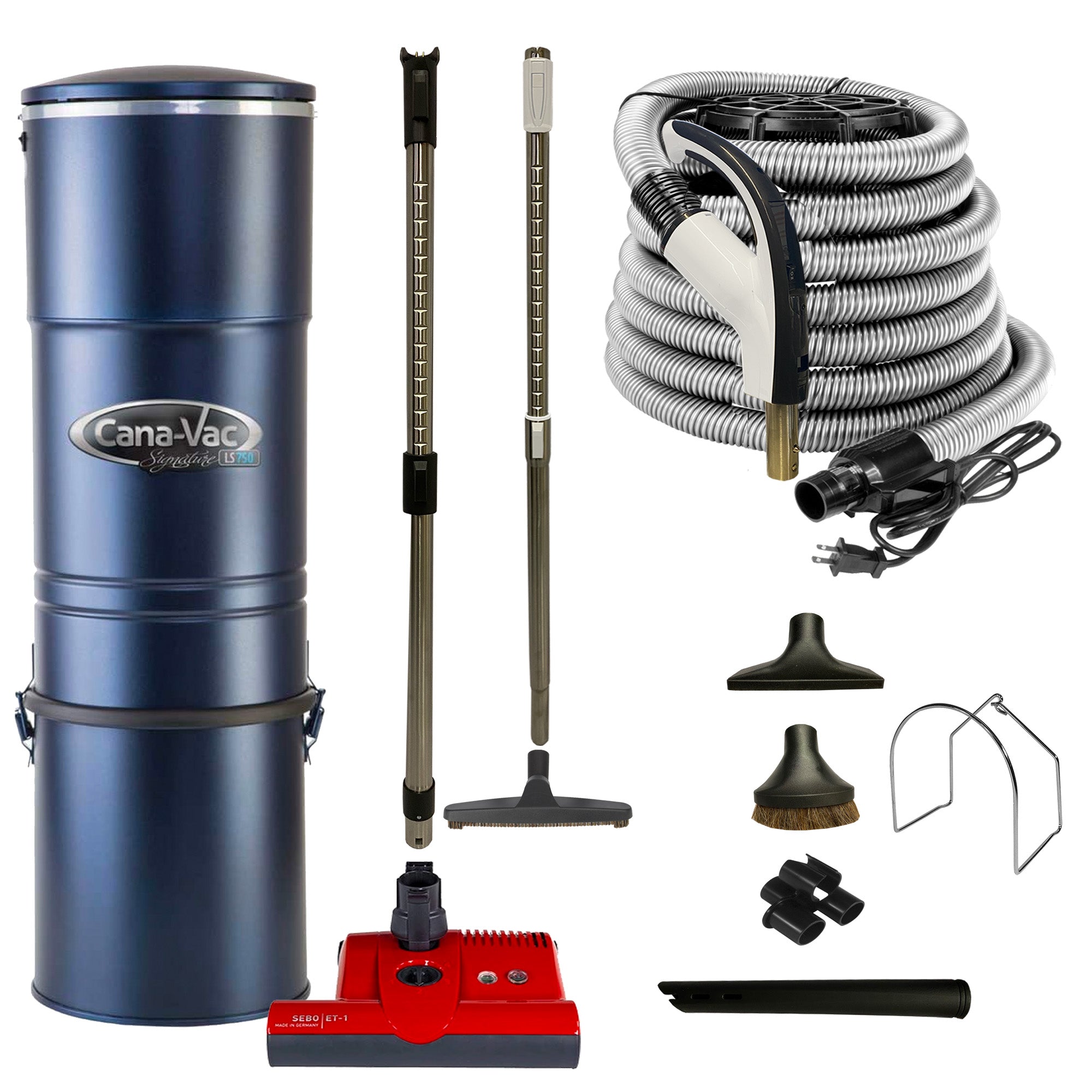
The Cyclovac H615 central vacuum cleaner with low-voltage Super Luxe accessory package is built for homeowners who want a complete setup. A low-voltage system uses a safe, low-voltage switch in the hose handle, which makes installation simpler and the hose easier to use.
Who is it best for?
- Homeowners building or renovating
- Families with pets, allergies, or heavy daily traffic
- Anyone who dislikes carrying a vacuum between floors
Confirm the home size the model is rated for and whether you need extra hose length, wall inlets, or tubing. A professional installer can help size the system correctly.
Henry Vacuums: Compact, Durable, and Easy to Service
What is a Henry vacuum?
Henry is the iconic Numatic canister vacuum, recognizable by its friendly face. Beneath the charm, it is a rugged commercial-grade machine used by cleaners, schools, and households that want something simple and long-lasting.
The Numatic Henry Compact HVR160 is a smaller version suited to home use, offices, and light commercial work. Its appeal comes down to a few things:
- A compact body that stores easily
- Durable construction that tolerates knocks
- Straightforward maintenance and widely available bags and parts
- A good balance of power and maneuverability
Pair it with genuine or correctly rated replacement bags so suction and filtration stay consistent.
Vacuum Crevice Tools and Wands
What does a crevice tool do?
A crevice tool is a narrow, angled nozzle that concentrates suction into tight spaces. It reaches along baseboards, between sofa cushions, inside car interiors, around radiators, and into corners where larger heads can't fit.
Why upgrade your tools and wands?
The wand and attachments determine how effective your vacuum is in daily use. A worn or ill-fitting wand can leak air, lose suction, and make cleaning tiring. Extension wands bring ceilings, vents, and high shelves within reach without a step ladder.
Always check:
- Diameter (32 mm and 35 mm are common sizes)
- Connection style (friction fit, button lock, or twist lock)
- Material (metal for durability, plastic for lightness)
- Compatibility with your vacuum brand and model
Explore replacement vacuum wands and crevice tools to match your machine.
Canister Vacuum HEPA: Cleaner Air Along With Cleaner Floors
What does HEPA mean?
HEPA stands for High-Efficiency Particulate Air. A true HEPA filter is designed to capture 99.97% of particles at 0.3 microns. That includes pollen, dust mite debris, and pet dander.
Why choose a canister HEPA vacuum?
Canister vacuums suit allergy-conscious households for several reasons:
- Sealed filtration helps prevent particles from escaping through gaps
- The separate cleaning head works on hardwood, tile, and carpet
- Long hoses and wands make stairs and upholstery easier
- Many models are quieter than traditional uprights
Not every machine labelled "HEPA" is sealed, however. For best results, look for a sealed system where air passes through the filter instead of leaking around it.
See the range of HEPA-ready canister vacuum cleaners to find a model for your home.
Comparison Table: Which Machine Fits Your Needs?
| Machine type | Best for | Floor types | Key strength | Main consideration |
|---|---|---|---|---|
| Floor auto scrubber | Large commercial spaces | Concrete, tile, vinyl | Cleans and dries in one pass | Higher upfront cost |
| Wet/dry or commercial canister | Hardwood, spills, workshops | Hardwood, tile, mixed | Versatile and durable | Use a soft floor head on wood. |
| Sebo canister | Quality-focused homes and offices | Carpet and hard floors | Build quality and filtration | Premium pricing |
| Henry compact | Light commercial and home | Mixed | Simple, tough, affordable parts | Basic feature set |
| Cyclovac central vacuum | Whole-home convenience | All floors | Quiet and powerful | Needs installation |
| HEPA canister | Allergy sufferers | All floors | Superior filtration | Choose a sealed system |
How to Choose the Right Vacuum: A Simple Decision Guide
- Large, hard-floored commercial space? Choose an auto scrubber.
- Mostly hardwood with occasional spills? Choose a wet/dry or commercial canister with a soft floor head.
- Allergies or asthma in the household? Choose a sealed HEPA canister.
- Multi-storey home where you hate lugging a vacuum? Consider a central vacuum like Cyclovac.
- Want a compact, hardy all-rounder? Consider the Henry Compact.
- Want long-term German build quality? Consider Sebo.
Maintenance Tips That Extend Vacuum Life
- Replace bags before they are completely full. Suction drops as airflow is restricted.
- Wash or replace filters on schedule. Follow the manufacturer's guidance.
- Check for blockages in hoses, wands and crevice tools.
- Inspect brush rolls for tangled hair and string.
- Store tools and attachments together so nothing goes missing.
- Service commercial machines regularly, especially in high-use facilities.
Frequently Asked Questions
1. What is the best floor auto scrubber for a small business?
A compact walk-behind scrubber is usually the best fit for small retail spaces, restaurants and offices. Look for a manageable cleaning path, adequate tank size and easy-to-source brushes and squeegees.
2. Can I use a wet/dry vacuum on hardwood floors?
Yes, with care. Use a soft floor brush, avoid leaving standing water and dry any wet spots promptly. Use wet pickup mainly for spills and snowmelt, and dry vacuum for routine cleaning.
3. Is a Sebo vacuum worth the price?
Many owners find Sebo vacuums worthwhile because of their robust construction, filtration and long service life. The higher purchase price is often offset by years of dependable use.
4. Do all central vacuums need bags?
No. Some are bagless and some use disposable bags. Check your model's specifications, and always use the correct bag size and type if bags are required.
5. What is a low-voltage central vacuum system?
A low-voltage system uses a safe, low-voltage circuit to start the power unit from a switch in the hose handle. It can make installation simpler and hose use more convenient.
6. How do I know which crevice tool or wand fits my vacuum?
Check your model number and the diameter and connection type of your existing wand. If you are unsure, compare the specifications in the product listing before ordering.
7. Is a HEPA canister vacuum good for allergies?
A sealed HEPA canister vacuum is among the best choices for allergy sufferers, because it captures very fine particles and helps prevent them from escaping back into the air.
8. Where can I buy replacement bags and parts in Canada?
Canadian retailers such as Vacuum Parts Canada carry bags, hoses, wands, filters and accessories for popular brands, so you can keep your equipment running without long waits.
Ready to Upgrade Your Cleaning Setup?
Clean floors protect your investment, your health and your reputation. Whether you need a heavy-duty floor auto scrubber, a hardwood-friendly commercial canister, a Henry Compact, or replacement bags and wands, the team at Vacuum Parts Canada can help you find the right fit.
Browse the collection today, or contact our team for expert advice on the best machine for your floors and budget.


Leave a comment
This site is protected by hCaptcha and the hCaptcha Privacy Policy and Terms of Service apply.