Central Vacuum Hose: The Complete Canadian Buyer's Guide (2026)
You've invested in a central vacuum system — one of the smartest home upgrades a Canadian homeowner can make. But if your central vacuum hose is cracked, tangled, or simply not performing the way it used to, even the most powerful built-in unit becomes frustrating to use. The hose is the single component you interact with every single time you vacuum, and choosing the right one makes all the difference between a chore and a breeze.
This guide walks you through everything you need to know — from understanding the different types of central vacuum hoses to picking the perfect fit for your floor plan, family, and budget.
What Is a Central Vacuum Hose (and Why It Matters More Than You Think)?
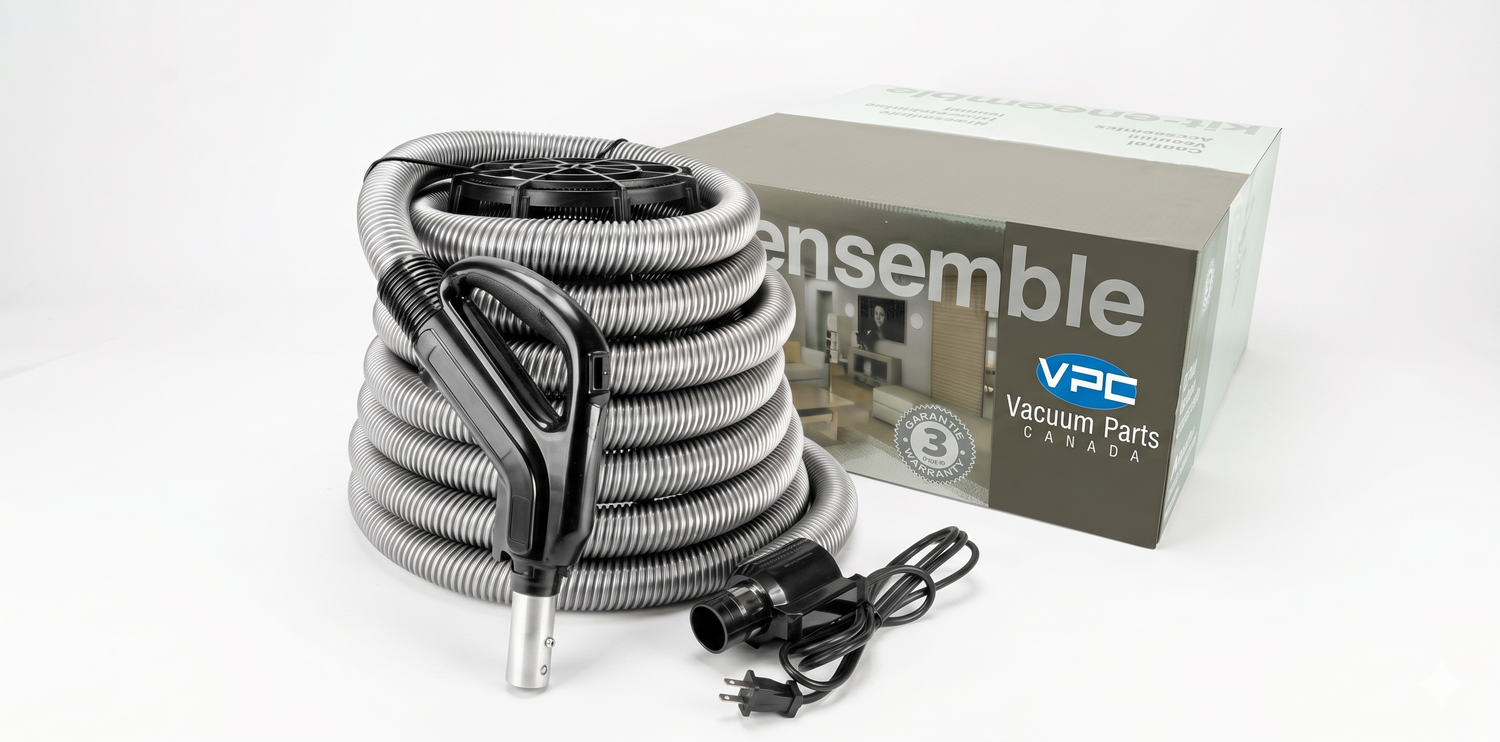
A central vacuum hose is the flexible conduit that connects you — and your cleaning attachments — to the suction power of the central unit installed in your basement, garage, or utility room. Unlike portable vacuum hoses that are part of the machine itself, a central vac hose plugs into wall inlets located throughout your home, directing dirt and debris through in-wall piping to a remote canister.
Because the hose travels with you room to room, it absorbs a lot of wear. It bends around corners, drags across thresholds, and gets pinched in doorways. A quality hose that fits your system properly isn't just a convenience — it's what protects your investment and keeps suction strong year after year.
Types of Central Vacuum Hoses
Not all central vacuum hoses are the same. Here's a breakdown of the main categories so you can shop with clarity.
1. Electric Hoses (Low Voltage)
An electric central vacuum hose carries both suction and electrical current. This allows the hose to power an electric power head — the motorized brushroll attachment used for deep carpet cleaning. These hoses connect to your wall inlet via a low-voltage signal wire, which activates the unit when the handle switch is turned on.
Electric hoses are the gold standard for homes with carpeting, as the powered brushroll agitates carpet fibres to lift embedded pet hair, dust, and allergens far more effectively than suction alone.
Best for: Carpeted rooms, pet owners, and anyone who wants maximum deep-cleaning performance.
2. Air-Only Hoses (Non-Electric / Suction Hoses)
An air-only central vacuum hose relies purely on suction — there's no electrical connection. These hoses are typically used with non-powered attachments like floor brushes, upholstery tools, dusting brushes, and crevice tools.
They're a great option for bare floors, hardwood, tile, and above-floor cleaning tasks. Many homeowners keep an air hose in their garage or utility space for cleaning cars, workshops, or stairs.
Best for: Hard floors, utility cleaning, and situations where a powered brushroll isn't needed.
3. Pigtail Hoses
A pigtail hose features a short coiled cord (the "pigtail") at the wall-inlet end that provides the electrical connection for the vacuum system. This connection style is common in older or standard installations. The pigtail curls when the system is off, protecting the contact point.
4. Direct-Connect Hoses
Rather than a pigtail, a direct-connect hose plugs straight into the inlet valve with a smooth, integrated connector. These are often sleeker and more durable at the connection point. Many modern central vacuum hoses sold today use a direct-connect design.
5. Retractable Central Vacuum Hoses (Hide-A-Hose)
If you've ever dreamed of never lugging a vacuum hose around again, a retractable system is worth exploring. The Hide-A-Hose system stores the hose inside your in-wall piping itself — you simply pull it out from the wall inlet when you need it and release it to retract automatically when you're done.
It's the ultimate in convenience and is especially popular in new construction and high-end renovations. Vacuum Parts Canada carries the complete Hide-A-Hose Retractable Central Vacuum System, including all required accessories and installation materials.
Best for: Homeowners who want a truly hose-free living space and clean, clutter-free interiors.
Key Features to Look for in a Central Vacuum Hose
Hose Length
Standard central vacuum hoses come in 30-foot and 35-foot lengths. For most homes, 30 feet is sufficient — it gives you enough reach to clean an average-sized room from a single wall inlet. If your home has large, open-concept spaces or high ceilings, a 35-foot hose provides extra flexibility without having to switch inlets as frequently.
Handle Design
The hose handle is your primary control interface. Look for:
- On/off switch on the handle — so you don't need to walk back to the wall inlet to turn the system on or off
- Swivel handle — reduces wrist fatigue and makes maneuvering around furniture much easier during long cleaning sessions
- Variable suction control — useful for switching between carpets and delicate surfaces
Hose Diameter and Compatibility
Most residential central vacuum hoses use a standard 1.5-inch diameter that fits the vast majority of wall inlets and wand connections. Always confirm compatibility with your specific central vacuum brand before purchasing. The good news is that most quality hoses — including those carried at Vacuum Parts Canada — are designed to fit all central vacuum brands.
Inner Lining
A smooth inner lining (rather than a ribbed interior) reduces airflow turbulence and minimizes clogging, especially when vacuuming pet hair or larger debris. Look for hoses marketed as "crush-resistant" or "kink-resistant" for daily durability.
Hose Cover
Some central vacuum hoses come with a fabric sock or hose cover. This protects the hose from scuffing your walls and furniture, and it also protects the hose itself from abrasion over time. If you have hardwood floors or freshly painted walls, a hose with a cover is a smart choice.
How to Choose the Right Central Vacuum Hose for Your Home
Here's a simple way to narrow down your decision:
Step 1: Determine your flooring type. Mostly carpet? You need an electric hose with a compatible power head. Mostly hardwood or tile? An air hose may be all you need — or a combination of both for different areas.
Step 2: Check your wall inlet configuration. Is your system wired for low-voltage (electric) connections? If yes, you can use an electric hose. If your system only has suction inlets, you'll use an air hose. Not sure? Vacuum Parts Canada's team can help you identify your setup — call them at 1-855-825-7784.
Step 3: Measure your space. Think about how far each inlet needs to reach to cover your cleaning area. When in doubt, go with the longer option — extra length is always easier to manage than coming up short mid-clean.
Step 4: Consider your lifestyle. Pets? Kids? High-traffic areas? Prioritize durability and a swivel handle for ease of use. If clutter is a concern, investigate a retractable hose system.
Signs It's Time to Replace Your Central Vacuum Hose
Many homeowners wait too long to replace a worn-out hose, not realizing that a compromised hose dramatically reduces suction performance. Watch for these signs:
Visible cracks or splits in the hose body are an obvious indicator. Even a small crack introduces an air leak that robs your system of suction power.
Reduced suction at the handle when the system is running strong is a classic symptom of a leaking hose.
A sticky or stiff hose that no longer flexes smoothly will make cleaning a physical struggle and can crack further under the strain.
Sparking or intermittent power to the power head may point to a broken wire inside an electric hose. This is both a performance issue and a safety concern.
Persistent odours from the hose even after thorough cleaning may mean debris has become embedded in the inner lining and the hose is past its useful life.
Central Vacuum Hose Accessories Worth Having
A great hose is just the start. Pair it with the right accessories for a complete cleaning system:
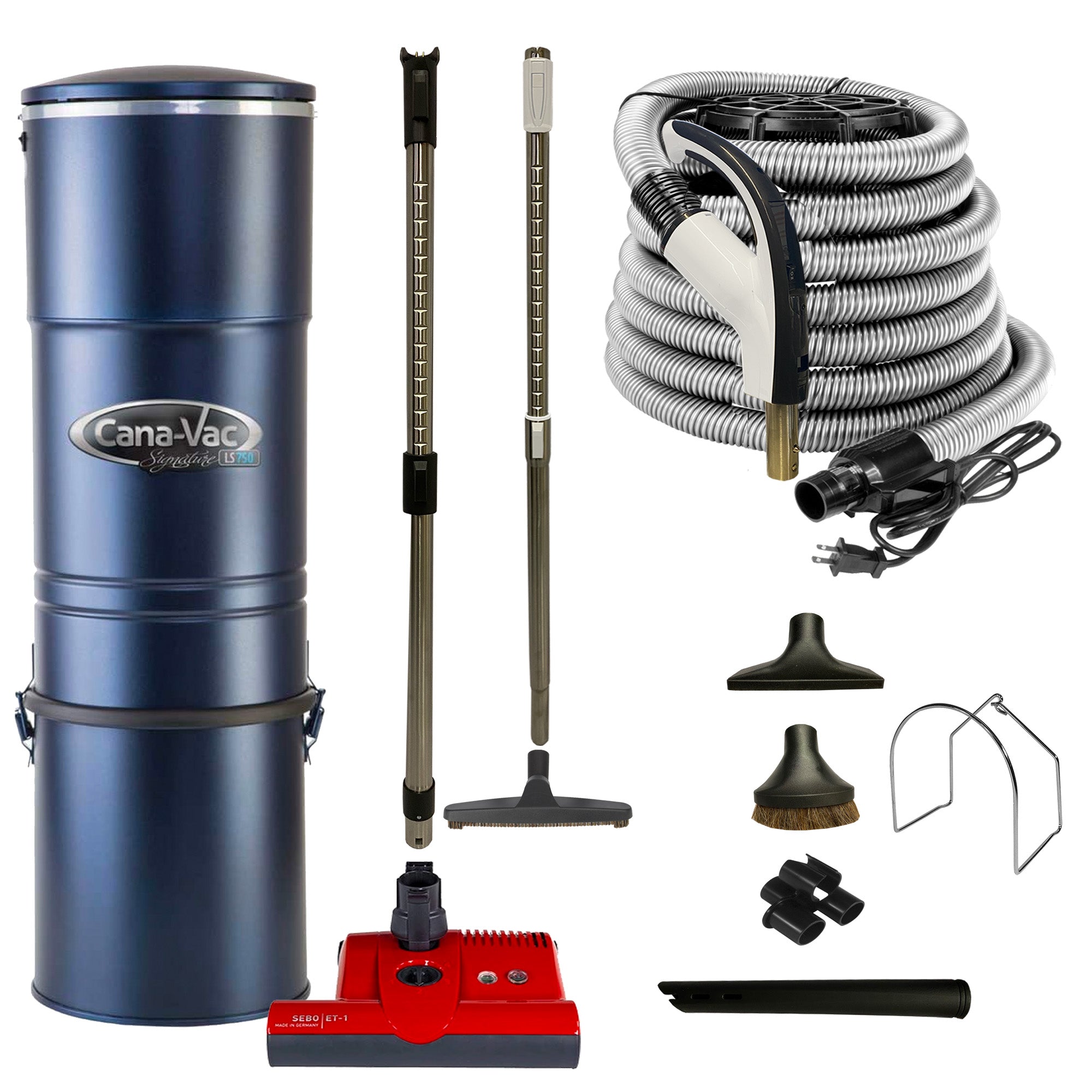
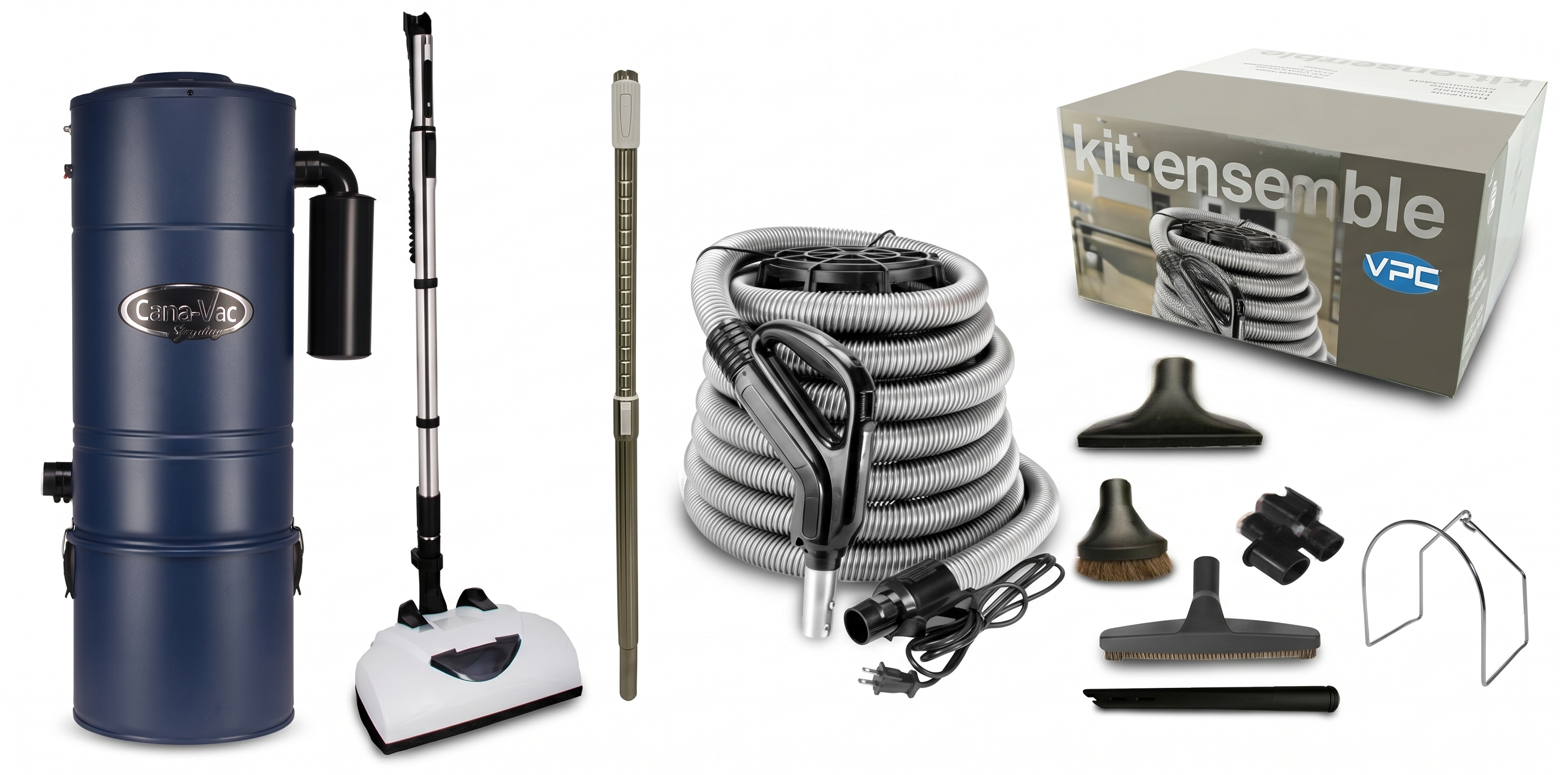
Telescopic Wand — adjusts to the perfect height for comfortable, upright vacuuming without back strain. The VPC Premium Power Head with Telescopic Wand is a popular choice for homeowners looking for a complete, ready-to-use setup.
Swivel Cuff — attaches between the hose and wand to allow 360-degree rotation, making it effortless to clean under furniture and around obstacles.
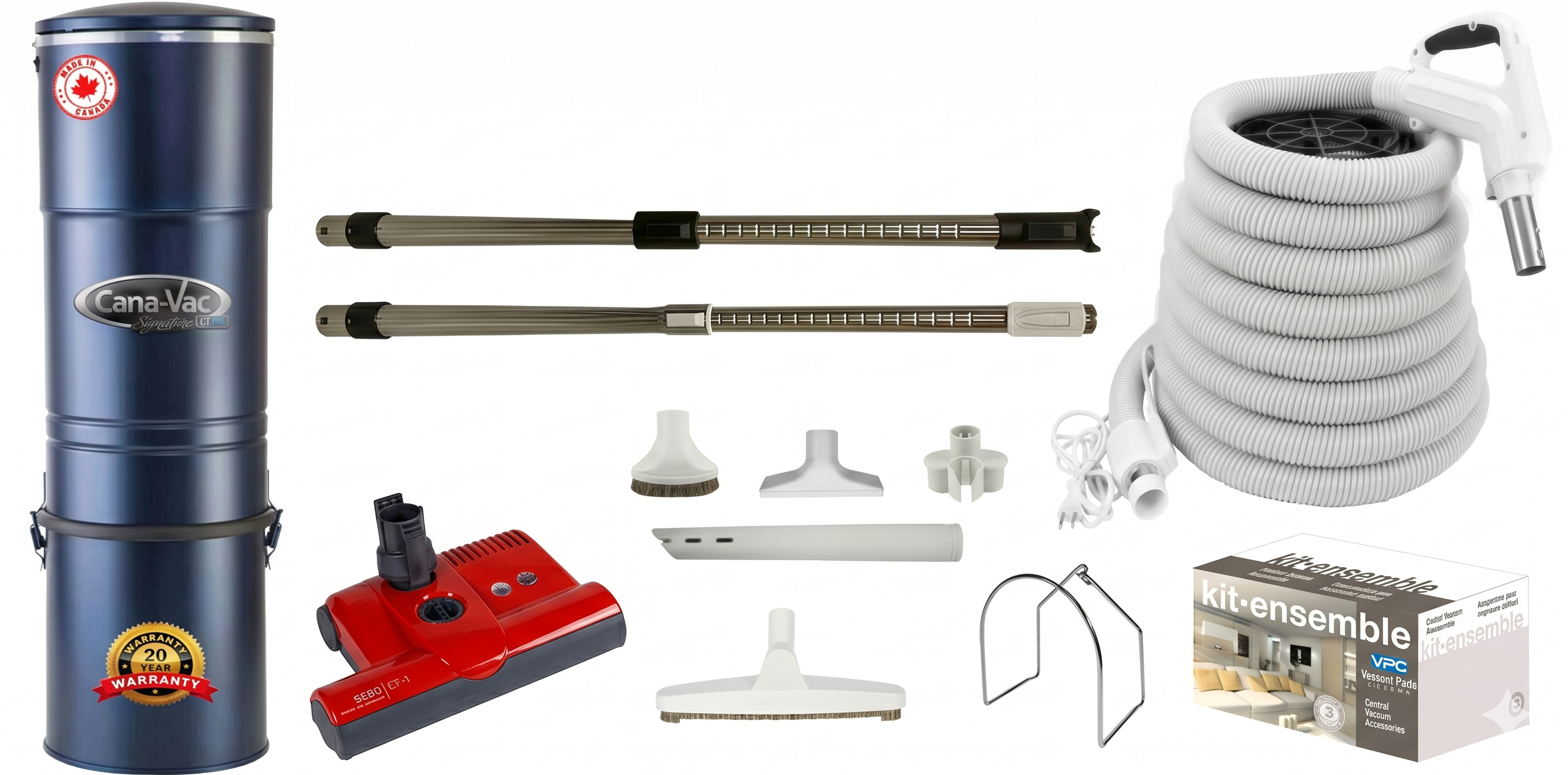
Central Vacuum Accessory Kit — a bundled set of attachments (crevice tool, dusting brush, upholstery tool, floor brush) that covers every surface in your home. VPC's Central Vacuum Accessory Kit with electric power nozzle and telescopic wand is one of the best-value kits on the market.
Hose Extension — need a few extra feet? A low-voltage hose extension adds reach without replacing your entire hose.
Why Buy Your Central Vacuum Hose from Vacuum Parts Canada?
If you're in Canada and searching for a central vacuum hose, Vacuum Parts Canada should be your first stop. Here's why thousands of Canadian homeowners trust them:
Best Price Guaranteed. Vacuum Parts Canada matches or beats any comparable Canadian price — no negotiating required.
Free Shipping on Orders Over $99. Most hose purchases qualify, meaning the price you see is the price you pay to your door.
Ships Fast. Customer reviews consistently mention next-day or two-day delivery from order to door — a genuine advantage when your cleaning routine depends on getting the right part quickly.
Fits All Major Brands. Their hose selection is designed to be compatible with virtually every central vacuum brand on the market, including CanaVac, DuoVac, DrainVac, Cyclovac, Beam, Electrolux, NuTone, and more.
Expert Guidance. With a knowledgeable team reachable by phone (1-855-825-7784) and a deep catalogue of parts and accessories, you'll never be left guessing whether a hose is right for your system.
Genuine Canadian Retailer. Based in Canada, serving Canadians — no customs headaches, no cross-border delays, no conversion rates eating into your savings.
Frequently Asked Questions
Can I use any central vacuum hose with my existing system? Most 1.5-inch standard hoses are universally compatible with the vast majority of central vacuum brands. For electric hoses, confirm your wall inlets support low-voltage wiring. When in doubt, contact the team at Vacuum Parts Canada.
What length of central vacuum hose do I need? 30 feet covers most rooms in a standard-sized home. If you have large, open-plan spaces or high ceilings, consider a 35-foot hose for extra reach.
How long should a central vacuum hose last? A quality central vacuum hose typically lasts 10 to 15 years with regular use. Hose covers, careful storage, and avoiding sharp bends will extend its lifespan considerably.
Can I repair a cracked central vacuum hose? Minor cracks near connectors can sometimes be repaired with hose repair kits, but cracks along the body of the hose typically mean it's time for a full replacement. A leaking hose wastes suction and makes every cleaning session less effective.
What's the difference between an electric and an air hose for a central vacuum? An electric hose powers a motorized brushroll for deep carpet cleaning. An air hose uses suction only and pairs with non-powered attachments. Many homes benefit from having both — an electric hose for bedrooms and living areas, and an air hose for the garage or utility cleaning.
Final Thoughts
Your central vacuum hose is the link between a powerful built-in system and a truly clean home. Choosing the right type — electric or air, standard length or retractable — means every square foot of your home gets the cleaning it deserves, without unnecessary effort on your part.
Whether you're replacing a worn-out hose, upgrading to a swivel-handle model, or exploring the convenience of a Hide-A-Hose retractable system, Vacuum Parts Canada has everything you need, at the best price in Canada, with fast shipping right to your door.
Browse the full Central Vacuum Hose collection at Vacuum Parts Canada
Have questions about which central vacuum hose is right for your system? Call the experts at Vacuum Parts Canada: 1-855-825-7784 or email info@vacuumpartscanada.ca

Leave a comment
This site is protected by hCaptcha and the hCaptcha Privacy Policy and Terms of Service apply.