Hide A Hose Central Vac: The Smart Way Ontario Homes Are Upgrading Their Central Vacuum
Quick Answer
A Hide A Hose Central Vac is a retractable central vacuum system that stores the hose inside your home's existing PVC piping instead of in a bulky closet or on a wall hook. When you need to clean, you simply pull a lightweight hose end from any wall inlet, use it, and let it retract back into the wall automatically when you're done. Hide A Hose Central Vac Systems are popular across Ontario—from Toronto and Mississauga to Ottawa and London—because they eliminate the hassle of dragging, storing, and tripping over a 30-35 foot hose. Vacuum Parts Canada supplies, installs, and services Hide-A-Hose systems throughout Ontario, with parts shipped fast and local installation support available.
Key Takeaways
- A Hide A Hose Central Vac stores the hose inside the wall piping, freeing up closet space and eliminating manual hose carrying.
- Hide A Hose Central Vac Systems work with most existing central vacuum power units already installed in Ontario homes.
- Average installation in an existing central vac system typically takes a single day for most residential homes.
- Ontario homeowners in cities like Toronto, Hamilton, Kitchener-Waterloo, Barrie, and Ottawa are increasingly retrofitting older central vacs with Hide-A-Hose technology.
- Vacuum Parts Canada offers genuine Hide-A-Hose components, accessory kits, and replacement sleeves, plus expert guidance for DIY or professional installation.
- Routine maintenance (sleeve checks, valve inspections) extends the lifespan of a Hide-A-Hose system significantly.
What Is a Hide A Hose Central Vac?
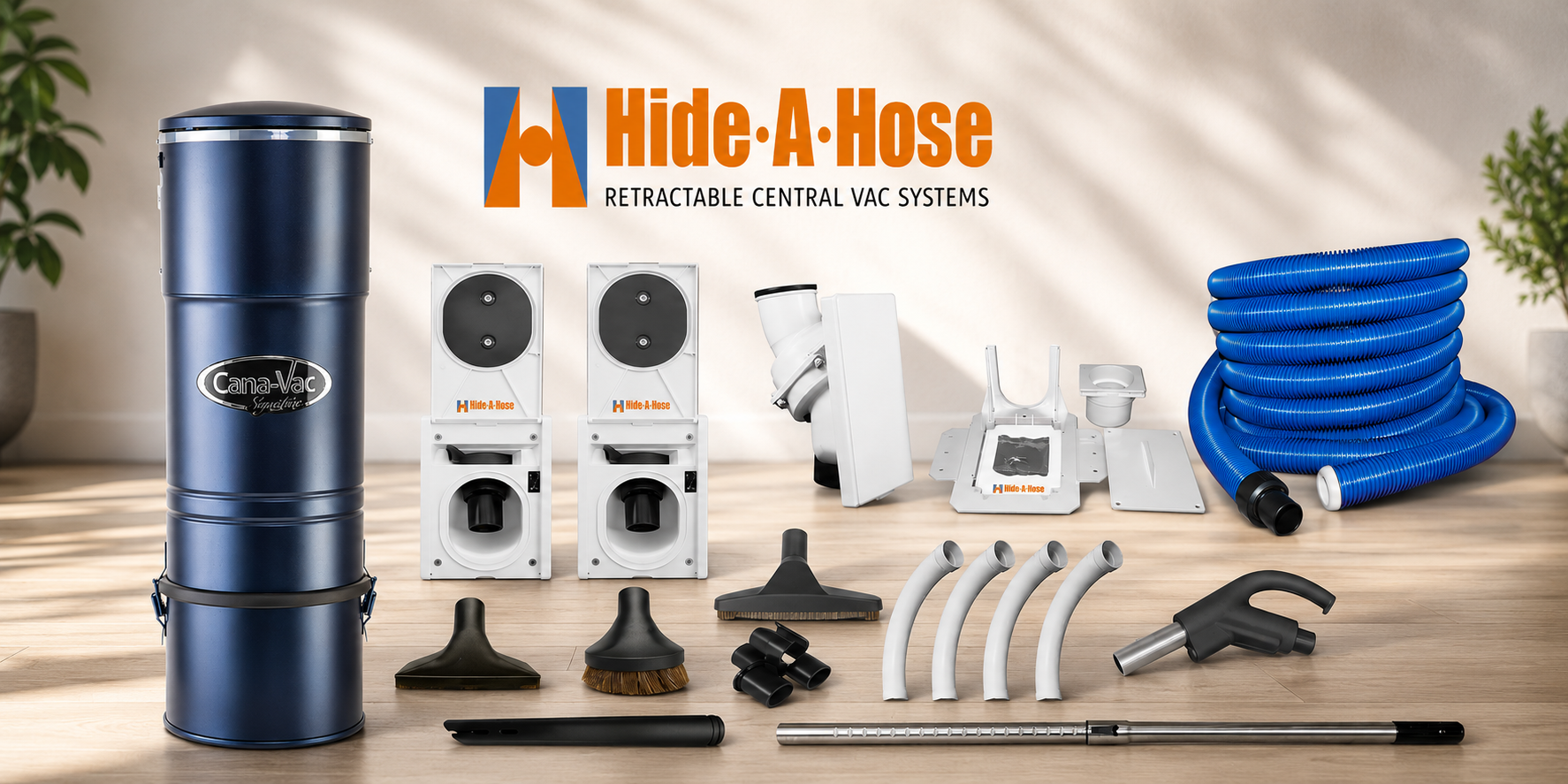
A Hide A Hose Central Vac is a retrofit or new-install accessory for a central vacuum system that replaces the traditional method of hose storage. Instead of unwinding a long hose from a closet reel or wall mount every time you vacuum, the hose lives coiled inside the central vacuum's own PVC pipe network. A spring-loaded valve at each wall inlet allows you to pull out exactly the length of hose you need — usually 30 to 35 feet — and when you're finished, the hose retracts back into the pipe on its own.
This is different from a standard central vacuum hose, which typically needs to be carried from room to room and stored separately. With a Hide A Hose Central Vac, every inlet effectively becomes its own self-storing hose station.
How Does the Retraction Mechanism Actually Work?
The system relies on a sealed sleeve inside the pipe and a vacuum-pressure-driven mechanism. When the central vacuum power unit is switched off after use, residual suction inside the sealed sleeve gently pulls the hose back through the piping until it's fully retracted at the valve. There are no motors, batteries, or cords involved in the retraction itself—it's a purely mechanical and pressure-based design, which is part of why these systems have proven so reliable over the past two decades.
Can You Add a Hide-A-Hose to an Existing Central Vacuum?
Yes. One of the biggest reasons Hide A Hose Central Vac Systems have grown in popularity is that they're largely retrofit-friendly. If a home already has central vacuum piping installed—common in Ontario homes built from the 1990s onward—a licensed installer or experienced DIYer can typically convert one or more inlets to Hide-A-Hose valves without ripping open walls. Vacuum Parts Canada frequently fields calls from homeowners in Mississauga, Vaughan, and Burlington asking exactly this question, and in most cases the answer is a straightforward yes.
Why Are Ontario Homeowners Switching to Hide A Hose Central Vac Systems?
Ontario's housing stock includes a huge range of home sizes, from compact Toronto townhomes to sprawling rural properties near London and Barrie. Across all of them, the same complaints about traditional central vacuums tend to surface: the hose is heavy, it's awkward to carry up and down stairs, and it never seems to fit back neatly into its storage spot.
According to industry data from the Central Vacuum Manufacturers Association, dragging a 30-foot hose is one of the top three reasons homeowners abandon central vacuum use altogether in favor of portable units—undermining the very efficiency central vac systems are meant to provide. Hide-A-Hose technology was developed specifically to solve that adoption problem.
What Are the Real Benefits Compared to a Standard Central Vacuum Hose?
- No hose dragging. You pull only the length you need from the nearest wall inlet.
- No storage clutter. There's no closet hook, reel, or floor coil taking up space.
- Multiple access points. Because each retrofit inlet can hold its own hose, larger homes can have hose access on every floor without one giant hose covering the whole house.
- Reduced trip hazards. A hose that automatically retracts means less chance of someone catching a foot on it mid-clean.
- Better resale appeal. Realtors across the GTA increasingly note that updated, low-clutter central vacuum systems are a small but real selling point in listings.
Is a Hide A Hose Central Vac Worth the Investment?
For most households, yes — particularly multi-level homes. A licensed HVAC and vacuum technician we spoke with at Vacuum Parts Canada noted that the majority of service calls for hose-related complaints (kinks, cracked hoses, tangled cords) disappear once a home switches to Hide-A-Hose. Because the hose stays inside the protective piping when not in use, it's also shielded from UV damage, pet chewing, and the general wear that comes from being dragged across hardwood or tile floors.
How Much Does a Hide A Hose Central Vac System Cost in Ontario?
Pricing depends on home size, number of inlets being converted, and whether the install is DIY or professional. As a general range seen across Ontario suppliers and installers:
- Single-inlet retrofit kit: Often a few hundred dollars for the valve, sleeve, and hose components.
- Whole-home conversion (3-5 inlets): Mid-range investment, scaling with the number of valves and hose lengths required.
- Professional installation labour: Varies by region—homeowners in Toronto and Ottawa metro areas may see different labour rates than those in smaller communities like Barrie, Guelph, or Peterborough.
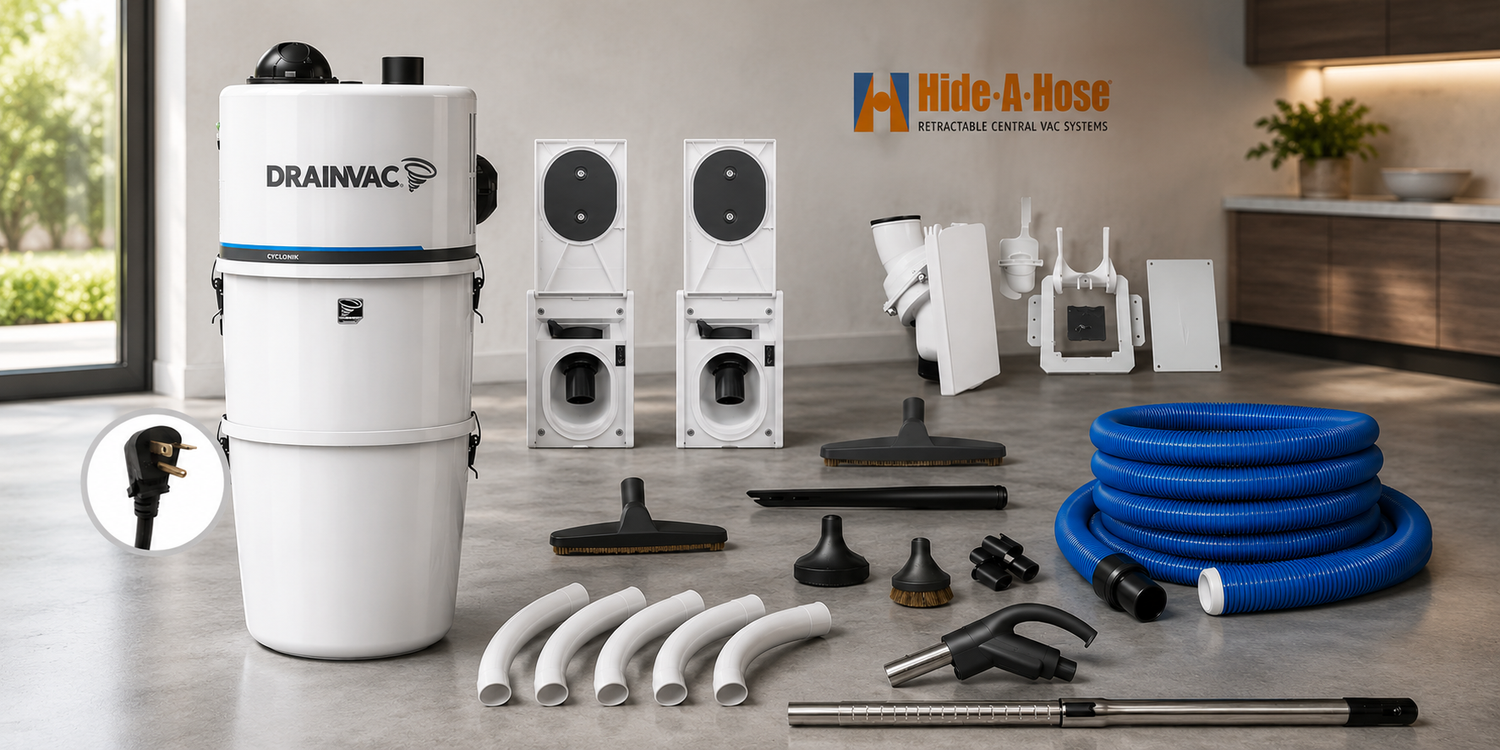
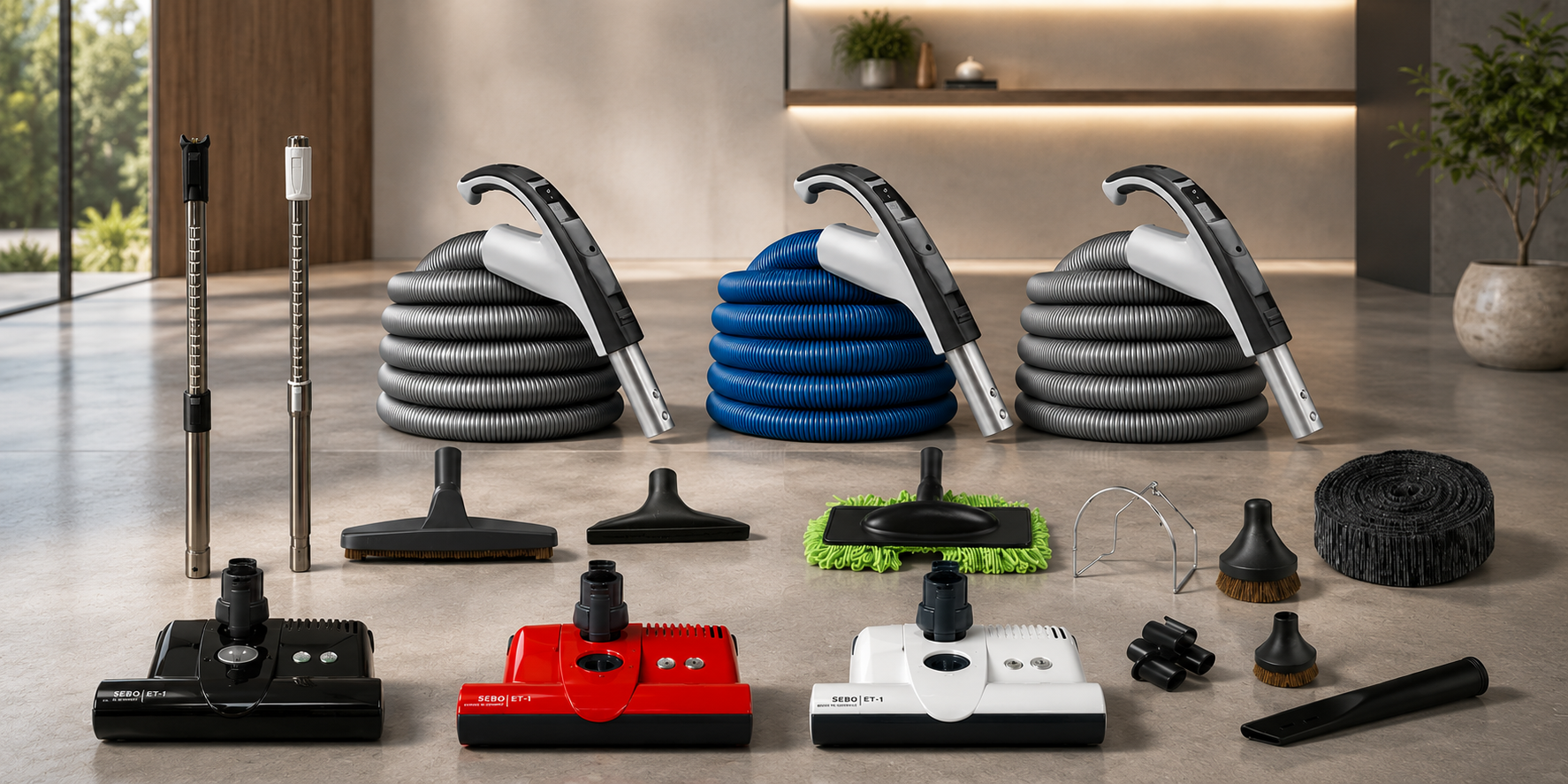
Vacuum Parts Canada stocks individual Hide-A-Hose components — valves, sleeves, hoses, and accessory kits — so homeowners can budget exactly for what their home needs rather than overpaying for a generic bundle.
What Maintenance Does a Hide-A-Hose System Need?
The internal rubber sleeve is the part most likely to need replacement over time, typically due to age or minor wear from repeated retraction cycles. Most manufacturers and installers recommend an annual visual inspection of the valve and sleeve, especially in homes with heavy vacuum use or pets. Replacement sleeve kits are widely available and are usually a simple swap rather than a full system overhaul.
Hide A Hose Central Vac vs. Traditional Central Vacuum Hose: Which Is Right for Your Home?
| Feature | Hide A Hose Central Vac | Traditional Central Vac Hose |
|---|---|---|
| Storage | Inside the wall piping | Closet, hook, or reel |
| Hose handling | Pull-and-retract per inlet | Carry full hose room to room |
| Best for | Multi-room, multi-level homes | Small homes, single-floor layouts |
| Trip/clutter risk | Low | Higher |
| Retrofit possible | Yes, in most existing systems | N/A (standard setup) |
For smaller bungalows with a single central inlet, a traditional hose may still make practical sense. But for the majority of two- and three-storey homes common throughout the Greater Toronto Area, Hamilton, and the Kitchener-Waterloo region, a Hide A Hose Central Vac setup tends to deliver a noticeably better day-to-day cleaning experience.
Where Can Ontario Homeowners Buy or Service a Hide A Hose Central Vac?
Vacuum Parts Canada supplies genuine Hide-A-Hose Central Vac Systems and replacement parts to customers throughout Ontario, including
- Toronto and the Greater Toronto Area (GTA)
- Mississauga, Brampton, and Vaughan
- Hamilton and Burlington
- Ottawa
- London
- Kitchener-Waterloo and Guelph
- Barrie and Simcoe County
Whether a homeowner needs a full Hide-A-Hose conversion kit, a single replacement sleeve, or expert advice on whether their existing central vac power unit is compatible, the team can guide the decision over the phone or by email before any purchase is made.
How Do I Know If My Home's Central Vac Power Unit Is Compatible?
Most standard central vacuum power units — including common Ontario-installed brands — are compatible with Hide-A-Hose retrofitting, since the technology integrates at the inlet and piping level rather than the motor itself. The safest approach is to check the existing pipe diameter (standard residential central vac pipe is typically compatible) and confirm inlet placement before ordering. Vacuum Parts Canada's support team can help confirm compatibility based on photos or model numbers.
Frequently Asked Questions
What is a Hide A Hose Central Vac? A Hide A Hose Central Vac is a retractable hose system that stores the central vacuum hose inside the home's existing PVC piping, allowing it to be pulled out from any wall inlet and retracted automatically after use.
How long is the hose on a typical Hide-A-Hose system? Most residential Hide-A-Hose systems use a 30 to 35 foot hose, long enough to cover an average-sized room without needing to switch inlets.
Can a Hide-A-Hose be installed in an older home? In most cases, yes, as long as the home already has central vacuum piping installed. Homes without existing central vac infrastructure would need a full system install first.
Does the hose retract automatically every time? Yes. Once the central vacuum motor is turned off, residual vacuum pressure inside the sleeve draws the hose back into the pipe without any manual effort.
How many inlets need to be converted to Hide-A-Hose? This depends on home size. Many Ontario homeowners convert one inlet per floor, which is usually enough coverage with a 30-35 foot hose at each location.
Is a Hide A Hose Central Vac more expensive than a regular central vacuum hose? The upfront cost is typically higher than a basic hose, but many homeowners find the convenience and durability gains worthwhile, especially in larger or multi-level homes.
What maintenance does a Hide-A-Hose Central Vac System need? The main maintenance item is the internal rubber sleeve, which can wear over time and is usually replaced as a standalone kit rather than requiring a full system replacement.
Will a Hide-A-Hose work with my existing central vacuum power unit? Most standard power units are compatible since the Hide-A-Hose mechanism operates at the piping and inlet level. Checking pipe diameter and inlet count is recommended before purchase.
Can I install a Hide-A-Hose system myself, or do I need a professional? Many homeowners with basic DIY experience can install a single-inlet retrofit kit themselves, though professional installation is recommended for whole-home conversions or homes with complex piping layouts.
Does Vacuum Parts Canada ship Hide-A-Hose parts across Ontario? Yes. Vacuum Parts Canada ships Hide-A-Hose components, accessory kits, and replacement sleeves to customers throughout Ontario, with fast turnaround on orders.
Ready to Upgrade to a Hide A Hose Central Vac?
If you're tired of dragging a heavy hose around your Toronto, Ottawa, Mississauga, or Hamilton-area home, it's time to see what a properly installed Hide A Hose Central Vac can do for your daily cleaning routine. Vacuum Parts Canada carries genuine Hide-A-Hose Central Vac Systems, replacement sleeves, and accessory kits, with knowledgeable support to help you choose the right setup for your home.
Call 1-855-825-7784 or visit vacuumpartscanada.ca to shop Hide-A-Hose systems or get expert advice from our Ontario-based team today.

Leave a comment
This site is protected by hCaptcha and the hCaptcha Privacy Policy and Terms of Service apply.