How to Choose the Best Central Vacuum System in 2026
Quick answer: The best central vacuum system for your home comes down to five factors: power (measured in air watts), filtration and collection type (bagged, bagless, cyclonic, or inverted), noise level, available attachments, and installation requirements. Larger homes generally need higher air watts and amperage to maintain power at inlets farthest from the motor, while households with allergies benefit most from cyclonic or inverted systems with strong filtration.
Why These Five Factors Matter Most
A central vacuum system is a long-term home investment, often lasting well over a decade, so choosing the right specifications upfront matters more than it does with a portable vacuum you might replace in a few years. Here's what to actually weigh before buying.
1. Air Watts and Power
Central vacuum power is measured in air watts, calculated using this formula:
(Airflow in CFM × Water Lift in inches) ÷ 8.5 = Air Watts
- Water lift measures the system's ability to pull liquids through the system.
- Airflow measures the system's ability to pull air (and the debris it carries) into the system.
- Amperage also affects overall power — higher amperage generally means a more powerful vacuum.
One detail worth planning around: power decreases the farther an inlet is from the central motor. In larger homes, this means the top floor may have noticeably less suction than the main floor, so it's worth choosing a higher-power unit if your home has multiple stories or a larger square footage.
2. Collection and Filtration Systems
Central vacuums use one of five main collection and filtration approaches, each with different maintenance needs and performance characteristics:
- Bagged systems — Use disposable bags to collect debris. Bags must be replaced before they get too full, or suction and air watts drop significantly, risking motor burnout.
- Bagless systems — Collect debris directly into a reusable chamber instead of a bag. Still needs regular emptying to avoid the same performance issues as an overfull bag.
- Vertical systems — Typically bagged, pulling airflow and debris downward into an upright collection bag.
- Cyclonic systems — Use centrifugal force to separate dirt and debris as it enters the tank, typically without a bag. Effective at maintaining consistent suction over time.
- Inverted systems — Pull air up and across the filter rather than down into it, using gravity to keep the filter cleaner longer as debris drops into the collection tank below when the unit shuts off.
3. Noise Level
One of a central vacuum's biggest advantages is quiet operation, largely because the motor and collection tank sit in a basement, garage, or closet, muffling the sound from living areas. That said, if you're near the collection tank while it's running, the motor drone can still be noticeable over time.
If your planned installation location is near a home office, nursery, or basement bedroom, look specifically for systems with noise-blocking filters and thicker collection tank housing, both of which meaningfully dampen sound.
4. Attachments
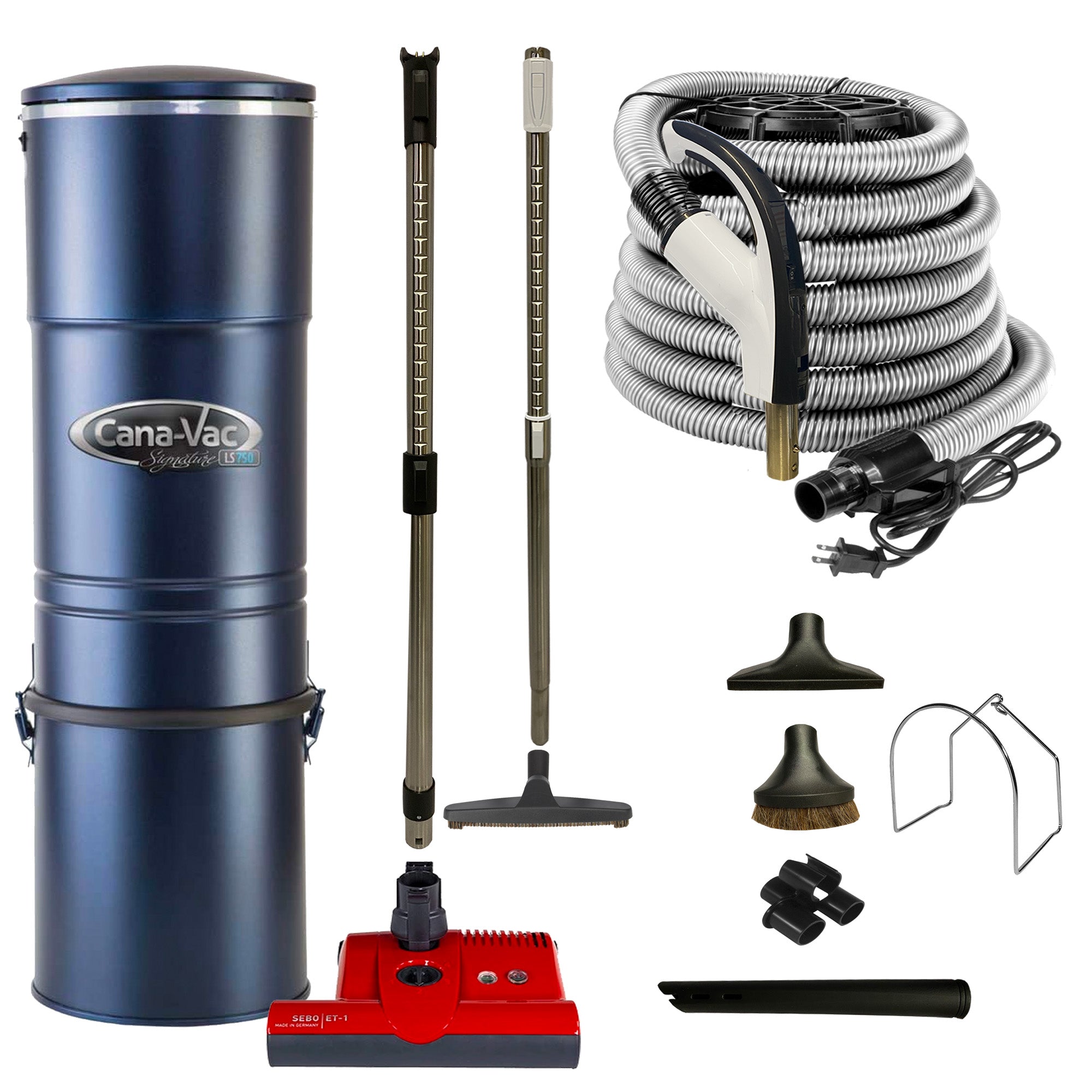
Central vacuum systems support a wide range of accessories that extend their usefulness well beyond basic floor cleaning:
- Crevice nozzles — Long, thin attachments for tight corners and crevices.
- Elbow wands — Help reach ceiling corners, spiderwebs, and the tops of floor-to-ceiling curtains, especially useful for shorter users.
- Wet nozzles — Feature a squeegee edge to pull in and suck up liquids.
- Brush nozzles (upholstery tools) — Designed for curtains and furniture, but also effective for car interiors.
- Hose extensions — Flexible or rigid add-ons that extend the reach of the hose.
- Powered vacuum heads — Attach to an upright suction tube, letting you vacuum carpet the way you would with a standard upright vacuum, powered entirely through the central hose connection.
5. Installation
Installation is one of the biggest hesitations for homeowners considering a central vacuum system, since tubing needs to run inside the walls from the motor and collection tank to every floor of the home. For most households, this means working with a professional central vacuum installer.
If you're considering a DIY install, keep a few things in mind:
- Central vac tubing looks similar to drainpipe but is not the same product — don't substitute one for the other.
- Most floor plans need one inlet valve for approximately every 750 square feet, with at least one inlet per floor.
- Each inlet includes a low-voltage coupler that triggers the on/off switch at the motor — this is what makes the system activate automatically when a hose is inserted.
What's New for Central Vacuum Systems in 2026
- Smart power indicators now help homeowners identify when suction has dropped below optimal levels at specific inlets, making top-floor power loss easier to catch early.
- HEPA-13 filtration has become more widely available across bagless, cyclonic, and inverted systems alike, offering stronger allergen capture without changing the underlying collection type.
- Retrofit-friendly tubing kits have made professional installation faster and less invasive in existing homes, reducing one of the biggest historical barriers to adoption.
- Quieter next-generation motors continue to close the gap even further between basement-level operation and near-silent performance from adjacent rooms.
Choosing Your System: Quick Reference
| Priority | Best Fit |
|---|---|
| Large or multi-story home | Higher air watts + higher amperage motor |
| Allergy or asthma sensitivity | Cyclonic or inverted system with HEPA filtration |
| Minimal ongoing maintenance | Bagless or cyclonic system |
| Quiet operation near living space | Noise-blocking filters + thick tank housing |
| Full-home versatility | Powered vacuum head + hose extensions |
Frequently Asked Questions
What are air watts, and why do they matter for a central vacuum? Air watts measure a central vacuum's overall power, calculated from airflow and water lift. Higher air watts generally mean stronger suction, which matters most in larger homes where power naturally decreases at inlets farther from the motor.
What's the difference between a cyclonic and an inverted central vacuum system? A cyclonic system uses centrifugal force to separate debris as it enters the tank, while an inverted system pulls air up and across the filter, using gravity to keep the filter cleaner over time.
Do I need a professional to install a central vacuum system? Most installations benefit from a professional, since tubing must run inside walls from the motor to every floor of the home. DIY installation is possible but requires careful planning around inlet spacing and correct tubing.
How many inlets does a central vacuum system need? Most floor plans require roughly one inlet valve for every 750 square feet, with at least one inlet on every floor of the home.
Can a central vacuum system be too loud? While central vacuums are generally quiet thanks to their remote motor location, proximity to the collection tank can still make the motor noticeable. Noise-blocking filters and thicker tank housing help reduce this if the tank will be near a living space.
Ready to Choose the Right System?
With the right combination of power, filtration, noise control, attachments, and installation planning, a central vacuum system can serve your home reliably for years. Vacuum Parts Canada can help you compare models and find the right fit for your home's size and needs—contact us today to get started.

Leave a comment
This site is protected by hCaptcha and the hCaptcha Privacy Policy and Terms of Service apply.