
Retractable Extension Cord Reels vs. Traditional Extension Cords: The Complete 2026 Buying Guide
Quick Answer
For most modern homes, a retractable extension cord reel is the better choice in 2026. It cuts tripping hazards, keeps garages and workspaces organized, and usually includes built-in overload protection. A traditional extension cord still wins on upfront price and portability if you only need power occasionally or in different spots around the house.
If you want one rule of thumb: choose a retractable reel for any fixed workspace (garage, workbench, or patio) and keep one lightweight traditional cord for occasional or on-the-go use.
What Is a Retractable Extension Cord Reel?
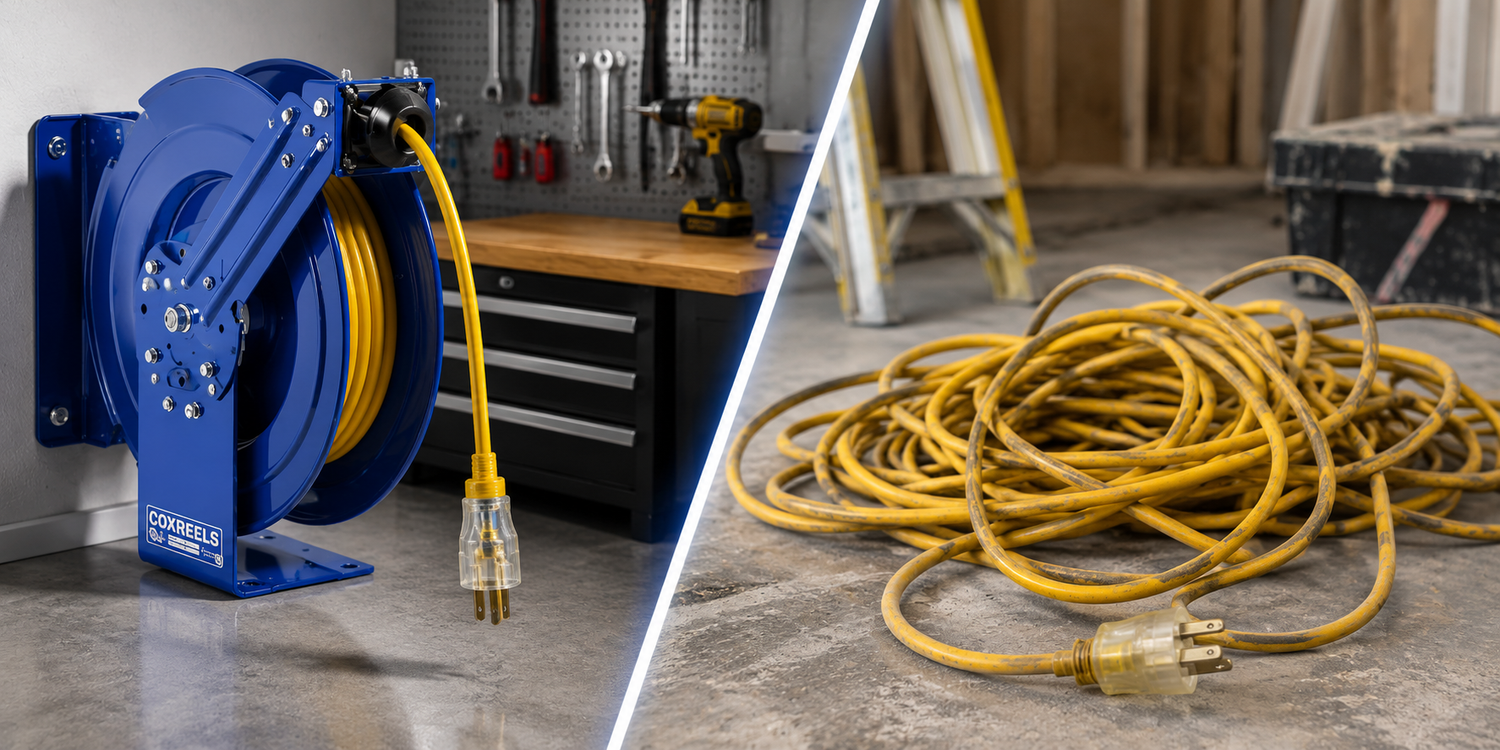
A retractable extension cord reel is a wall-, ceiling-, or floor-mounted housing that stores the cord on an internal spool. Pull the cord to the length you need; a spring or motorized mechanism retracts it back into the case when you're done.
Most 2026 models add the following:
- Auto-stop or locking length settings
- LED-lit outlets for low-light garages and yards
- Weatherproof/IP-rated casings for outdoor use
- USB-C and smart-outlet variants for charging tools and devices
What Is a Traditional Extension Cord?
A traditional extension cord is a flexible insulated cable with a plug on one end and one or more outlets on the other, sold in fixed lengths (typically 10–100 ft) and gauges (10–16 AWG). It has no storage mechanism, so the user is responsible for coiling, hanging, or bundling it after use.
Retractable Cord Reel vs. Traditional Cord: Side-by-Side
| Factor | Retractable Reel | Traditional Cord |
|---|---|---|
| Storage & tidiness | Self-winding, no clutter | Manual coiling required |
| Tripping hazard | Low (cord retracts fully) | Higher if left out |
| Upfront cost | Higher | Lower |
| Portability | Best for fixed locations | Best for moving room to room |
| Durability | Protected housing extends lifespan | More exposed, wears faster |
| Safety features | Often includes breakers/overload protection | Varies by brand, usually basic |
| Best for | Garages, workshops, patios, offices | Travel, temporary jobs, backup power |
Why Retractable Cord Reels Are Gaining Ground in 2026
1. They solve the #1 complaint about extension cords: clutter. The cord winds back into its housing automatically, so there's no loose cable creating a trip risk—a real factor in homes with kids, pets, or a home office.
2. Length control reduces waste and hazards. You extend only what you need instead of managing 25 extra feet of slack.
3. Built to last longer. The protective casing shields the cord from sun, moisture, and abrasion when it's retracted, so reels typically outlast an equivalent-gauge traditional cord under the same conditions.
4. Safety certifications are now standard. Most 2026 reels ship with thermal cutoffs, overload protection, and UL/ETL-style certification, which matters most in workshops and outdoor setups.
Trade-offs: reels cost more upfront, and mounted models aren't meant to travel between rooms.
Why Traditional Cords Still Make Sense
- Lower cost per foot — ideal for one-off jobs or backup power needs.
- Truly portable — grab it, coil it, move it anywhere, including road trips or job sites.
- Universally available — every hardware store carries them, so replacement is fast.
Trade-offs: They tangle, take up storage space, and wear out faster without a protective housing.
Which One Should You Buy?
- Choose a retractable reel if: you have a fixed workspace (garage, workbench, patio, or home office) and want a cleaner, safer setup with less daily hassle.
- Choose a traditional cord if: you need something inexpensive, lightweight, and easy to move between rooms or take off-site.
- Best of both: many households keep one retractable reel mounted in the garage or workshop, plus one or two traditional cords for portable or backup use.
Frequently Asked Questions
Are retractable extension cord reels safer than traditional cords? Generally yes. Retractable reels reduce tripping hazards by keeping excess cord off the floor, and most current models include overload protection and thermal shutoff—features not guaranteed on basic traditional cords.
Do retractable cord reels last longer than regular extension cords? Yes, typically. The housing protects the cord from sun, moisture, and repeated bending when it's stored, which is usually the biggest cause of early wear on exposed traditional cords.
Are retractable cord reels worth the extra cost? For a fixed-use space like a garage, workshop, or patio, most owners find the extra upfront cost pays off in durability, safety, and convenience. For occasional or one-off use, a traditional cord is usually the more economical pick.
Can a retractable extension cord reel be used outdoors? Yes, if it's rated for outdoor/weatherproof use (check the IP rating). Not all models are outdoor-rated, so confirm this before mounting one outside.
What gauge extension cord do I need? Lower gauge numbers (10–12 AWG) carry more current over longer distances and suit heavy tools; higher gauge numbers (14–16 AWG) are fine for lighter electronics over shorter runs. This applies to both reels and traditional cords.
Ready to Upgrade Your Setup?
If clutter, tripping hazards, or a worn-out extension cord are on your list of things to fix this year, a retractable cord reel is one of the simplest upgrades for a garage, workshop, or home office. Browse our current retractable reel lineup to find the length, mount style, and outlet configuration that fits your space.

Leave a comment
This site is protected by hCaptcha and the hCaptcha Privacy Policy and Terms of Service apply.