Central Vacuum Systems Canada: The Complete Central Vacuum Guide for Ontario Residents
Quick Answer
Central vacuum systems in Canada are whole-home cleaning units that remove dust, allergens, and debris through a network of in-wall tubing connected to a central power unit, usually installed in a basement or garage. They offer up to three times the suction power of portable vacuums, vent dirt and allergens outside your living space, and can improve indoor air quality significantly. For Ontario homeowners, the best central vacuum systems combine a powerful motor, HEPA-level filtration, durable tubing, and a package that matches home size—and Vacuum Parts Canada offers complete, ready-to-install packages designed specifically for Canadian homes.
Key Takeaways
- Central vacuum systems Canada-wide [vacuums] are growing in popularity because they reduce allergens, improve air quality, and last far longer than portable vacuums.
- The best central vacuum systems match motor power and tank capacity to actual home square footage — bigger isn't always better.
- A complete central vacuum package typically includes the power unit, tubing, hose, and a powerhead or attachment kit.
- Installation cost in Ontario varies based on whether it's new construction or a retrofit.
- Vacuum Parts Canada supplies, services, and supports central vacuum systems across Ontario, including Toronto, Mississauga, Hamilton, London, Ottawa, and the Greater Toronto Area.
What Are Central Vacuum Systems and How Do They Work?
A central vacuum system is a built-in cleaning solution made up of a powerful motor unit, a network of pipes hidden inside your walls, and inlet valves placed strategically throughout the home. Instead of dragging a bulky machine from room to room, you simply plug a lightweight hose into the nearest wall inlet, and suction does the rest. Dirt and debris travel through the tubing to a collection canister far away from your living space—usually in the garage, basement, or utility room.
This design is the main reason central vacuum systems in Canada have become the go-to choice for new builds and renovations alike. Because the motor and collection bin sit outside the main living area, there's no recirculated dust, no motor noise in your face, and no heavy canister to haul up the stairs.
How Is a Central Vacuum Different From a Regular Vacuum?
The biggest difference is where the dirt ends up. Portable vacuums — even high-end HEPA models — recirculate some air back into the room as they clean. Central vacuum systems pull air and debris completely out of the living space and into a sealed unit, often vented outdoors. That single design choice is why allergy sufferers and pet owners across Ontario increasingly ask for central vacuum installation by name.
Why Are Central Vacuum Systems Becoming the Top Choice Across Ontario?
Ontario homeowners are dealing with longer indoor seasons, more pets, and growing awareness around indoor air quality — and central vacuum systems address all three at once.
Research from the University of California, Davis School of Medicine, found that switching from a portable vacuum to a central vacuum system was linked to a noticeable reduction in allergy symptoms among study participants since fewer airborne particles were left to resettle in the room. The U.S. EPA has also noted that central vacuums vented to the outside can help lower household exposure to dust mites and other irritants. While these studies originated outside Canada, the underlying mechanics apply just as much to homes in Toronto or Thunder Bay as anywhere else — sealed, well-insulated houses trap more indoor pollutants, and a vented central system is one of the most effective tools to manage that.
Do Central Vacuums Actually Improve Air Quality?
Yes — and the logic is fairly simple. A central vacuum's exhaust is directed away from the room you're cleaning, rather than blown back into it. That means dust mite debris, pet dander, and pollen are captured and removed rather than stirred up and resettled. For households with asthma, allergies, or young children, this is often the deciding factor when choosing between a high-end portable vacuum and a built-in system.
Are Central Vacuum Systems Worth It for Smaller Homes Too?
Absolutely. While central vacuums are common in larger homes, many manufacturers now make compact power units sized for condos, bungalows, and townhomes. The package simply scales down — fewer inlets, a smaller canister, and a motor rated for the square footage rather than an oversized commercial-grade unit.
What Makes the Best Central Vacuum Systems?
Not every central vacuum package is built the same, and "best" depends heavily on your home's size, flooring type, and household needs. Here's what experienced installers look at first.
How Much Suction Power Do You Actually Need?
Suction is measured in sealed suction (inches of water lift) and airwatts. As a general guideline:
- Under 2,500 sq. ft. — a mid-range motor (500–600 airwatts) is usually sufficient.
- 2,500–4,500 sq. ft. — look for a higher-capacity motor with a larger canister to reduce emptying frequency.
- 4,500+ sq. ft. or multi-level homes—invest in a top-tier motor with two-stage or cyclonic filtration to maintain consistent suction across long tubing runs.
What Filtration Type Should You Choose?
Cyclonic (bagless) systems are popular because they maintain suction as dirt accumulates, while bag-style filtration tends to trap finer dust particles more completely. HEPA filtration bags are worth the upgrade for allergy-prone households, since they capture particles as small as 0.3 microns.
Does Tubing and Accessory Quality Matter?
It matters more than most homeowners expect. PVC tubing is the industry standard for durability, and the powerhead you choose should match your flooring—a motorized brush powerhead for carpet and a hard-floor attachment with a sealed bristle strip for hardwood, tile, or laminate.
Which Brands Are Considered the Best Central Vacuum Systems in Canada?
Reliable, well-reviewed manufacturers commonly recommended by Canadian installers include Cana-Vac, Beam, VACUFLO, M&S Systems, and Drainvac. Each has different strengths—some prioritize sound dampening, others prioritize raw suction or compact tank size—which is why matching the unit to the home matters more than chasing a single "best" brand name.
Central Vacuum Packages: What's Actually Included?
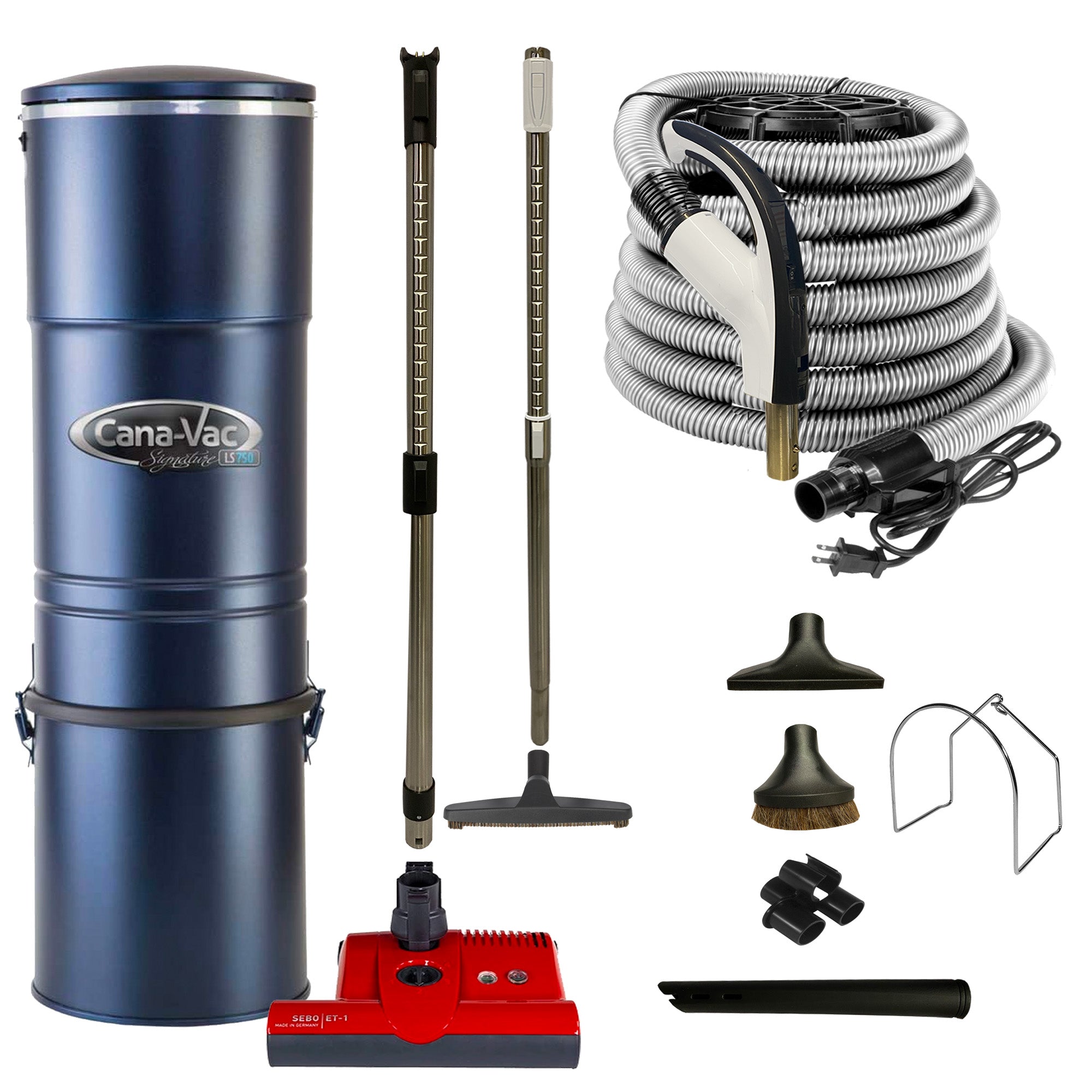
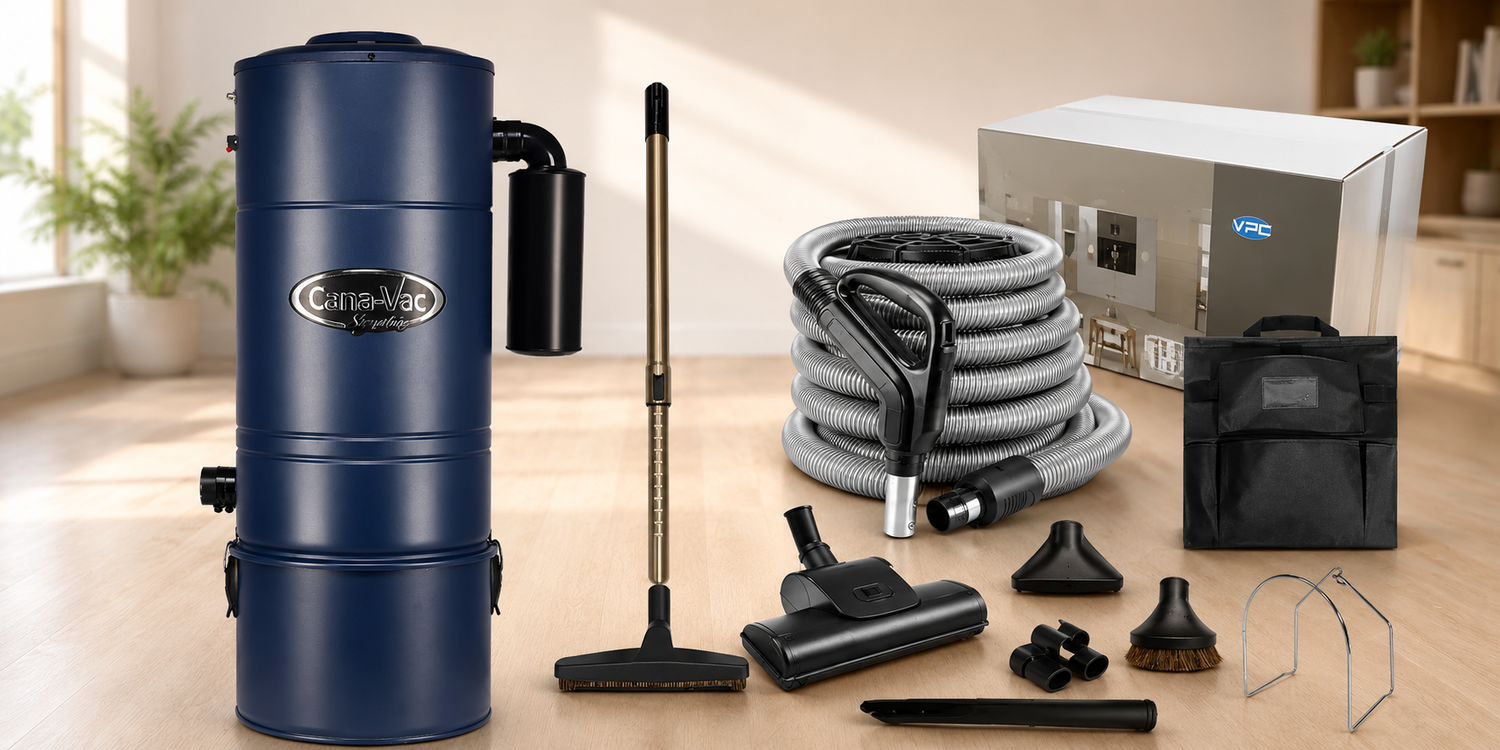
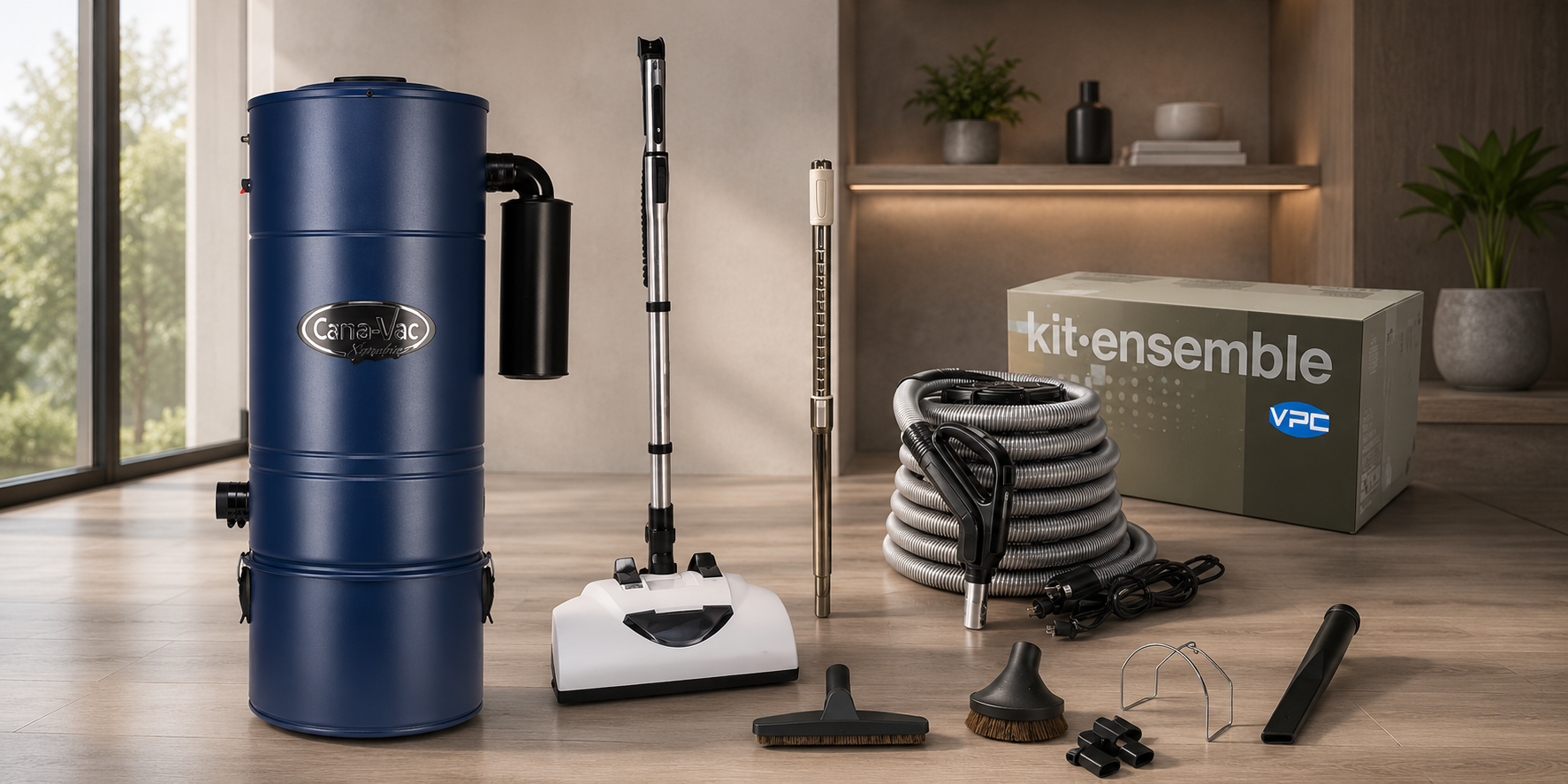
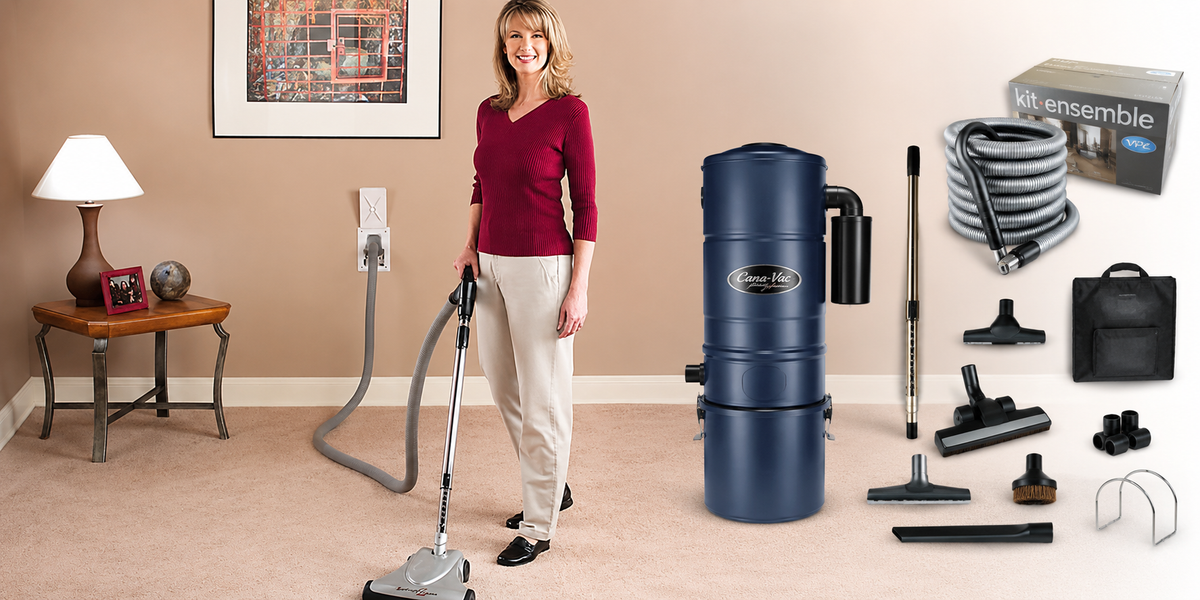
A complete central vacuum package generally bundles together everything needed for a working system, which removes a lot of the guesswork for first-time buyers. A typical package includes:
- Power unit — the motor and collection canister
- Hose — usually 30 or 35 feet, with low-voltage or direct-connect wiring for one-button activation
- Powerhead or attachment kit — carpet powerhead, hard-floor tool, crevice tool, dusting brush, and upholstery attachment
- Mounting hardware and wall inlets
Buying as a package, rather than piecing components together individually, almost always works out more cost-effectively and ensures every part is properly matched in suction rating and hose diameter.
How Do I Know Which Package Size Fits My Home?
A simple rule of thumb: count the number of inlets needed based on hose reach. Most installers place inlets so that a 30-foot hose can reach every corner of every room from at least one inlet—typically one inlet per 600–700 sq. ft. of living space.
How Much Do Central Vacuum Systems Cost in Canada?
Pricing depends on whether you're installing during new construction or retrofitting an existing home.
- New construction installation: Generally, the most cost-effective option, since tubing can be run inside open wall cavities before drywall goes up.
- Retrofit installation: Slightly higher due to the labour of running tubing through finished walls, attics, or basements—though experienced installers can often complete this with minimal drywall disruption.
- DIY installation: A popular option for handy homeowners, since central vacuum packages are designed with straightforward connections and clear inlet placement guides.
Across Ontario, total package and installation costs commonly range from a few hundred dollars for a basic single-inlet retrofit kit to several thousand dollars for a premium whole-home system with HEPA filtration and multiple powerheads.
New Installation vs. Retrofit — Which Is Right for Your Ontario Home?
If you're building or doing a major renovation, install the tubing before drywall closes the walls—it's the easiest and most affordable time to do it. If you're retrofitting an existing home, basements and attics with exposed joists make installation much simpler, and a skilled technician can often route tubing through closets and unfinished spaces to avoid cutting into finished walls.
Can I Install a Central Vacuum System Myself?
Many homeowners successfully install a basic system themselves, especially with a pre-packaged kit and clear instructions. That said, for multi-level homes, finished walls, or complex tubing runs, professional installation ensures proper suction balance and avoids costly rework.
Why Choose Vacuum Parts Canada for Central Vacuum Systems in Ontario?
At Vacuum Parts Canada, we work with homeowners across Ontario — including Toronto, Mississauga, Brampton, Hamilton, London, Kitchener-Waterloo, Vaughan, Markham, and Ottawa — to help them choose, install, and maintain the right central vacuum system for their home. Our central vacuum packages are curated from trusted brands, sized correctly for different home types, and backed by parts and service support so your system keeps performing for years, not just at the time of installation. Whether you're outfitting a new build or replacing an aging unit, our team can match you with the best central vacuum systems for your specific square footage, flooring mix, and budget.
Conclusion: Finding the Right Central Vacuum System for Your Home
Choosing the right central vacuum system in Canada comes down to matching motor power, filtration, and accessories to your home's actual size and needs — not simply picking the most expensive package on the shelf. With the right setup, Ontario homeowners get a cleaner, healthier home with far less effort than a portable vacuum ever offers. If you're ready to explore central vacuum systems Canada-wide, browse our central vacuum packages or reach out to our Ontario-based team for a recommendation tailored to your home.
Frequently Asked Questions
1. What is the average lifespan of a central vacuum system? Most quality central vacuum systems last 15 to 20 years with proper maintenance, significantly longer than the typical 5–8-year lifespan of a portable vacuum.
2. Do central vacuum systems increase home value? Yes, a built-in central vacuum system is generally viewed as a desirable feature by buyers and can be a selling point, particularly in larger homes.
3. How often do I need to empty a central vacuum canister? This depends on canister size and household size, but most homes empty the canister every 4 to 8 weeks under typical use.
4. Can a central vacuum system be installed in an older home? Yes, retrofitting is common in older homes. Installers route tubing through basements, attics, and closets to minimize wall disruption.
5. Are central vacuum systems noisy? No—because the motor unit is installed away from living areas (typically garage or basement), central vacuums are noticeably quieter than portable vacuums during use.
6. What size central vacuum system do I need for my home? Sizing depends on square footage: smaller homes under 2,500 sq. ft. need less motor power and fewer inlets than homes over 4,500 sq. ft.
7. Do central vacuum systems help with pet hair and dander? Yes, central vacuums are particularly effective for pet hair and dander because debris is removed from the living space entirely rather than recirculated.
8. What's included in a central vacuum package? A standard package includes the power unit, hose, powerhead or attachment kit, wall inlets, and mounting hardware.
9. How much does it cost to install a central vacuum system in Ontario? Costs vary based on home size and whether it's new construction or retrofit installation, ranging from a few hundred dollars for basic kits to several thousand for premium whole-home systems.
10. Where can I buy central vacuum systems and parts in Ontario? Vacuum Parts Canada supplies central vacuum packages, replacement parts, and installation support to homeowners across Ontario, including the Greater Toronto Area, Hamilton, London, and Ottawa.
Ready to Upgrade to a Central Vacuum System in Ontario?
If you're searching for the best central vacuum systems in Canada, our Ontario-based team at Vacuum Parts Canada is here to help you choose the right package for your home — whether you're in Toronto, Mississauga, Hamilton, Ottawa, or anywhere in between. Browse our Central Vacuum Packages today or contact us for a personalized recommendation and expert installation support.

Leave a comment
This site is protected by hCaptcha and the hCaptcha Privacy Policy and Terms of Service apply.