How to Choose the Best Central Vacuum Powerhead in 2026
Quick answer: The best central vacuum powerhead depends primarily on your carpet type. Turbo (air-driven) powerheads work well for low-pile rugs and are more budget-friendly, while electric powerheads deliver stronger performance on thick area rugs and wall-to-wall carpeting. From there, the right choice comes down to connection type, height adjustment, brush quality, belt type, profile, width, and weight.
Why More Homeowners Are Choosing Central Vacuum in 2026
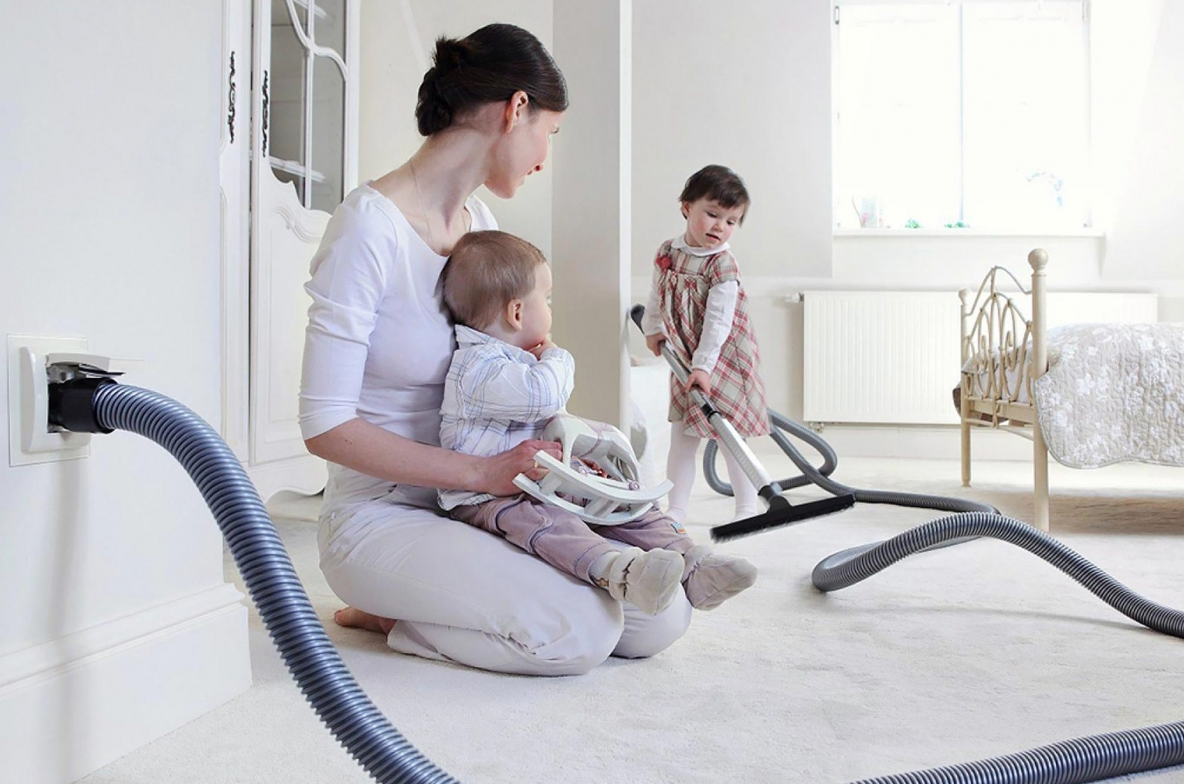
More homeowners across Ottawa and beyond have discovered the ease of a central vacuum system in Ottawa: insert the hose into a baseboard inlet, clean the room, and store the hose — no heavy unit to drag around, no cord to manage, no bending to match an awkward machine height, and no dust getting kicked back into the room you just cleaned. As more households upgrade in 2026, the natural next question becomes, "Which powerhead actually gets the best results?"
Powerhead Basics: What "Turbo," "Air-Driven," and "Electric" Really Mean
You'll come across a few terms when shopping for a central vacuum powerhead, and it helps to know they're not as different as they sound:
- Turbo / air-driven — These terms describe the same technology. Suction alone spins the beater bar, which knocks dirt loose from carpet fibers as air moves through the head.
- Electric — An electric current powers the beater bar directly, independent of suction strength, giving it more consistent power on demanding carpet types.
Which Powerhead Is Right for Your Carpet?
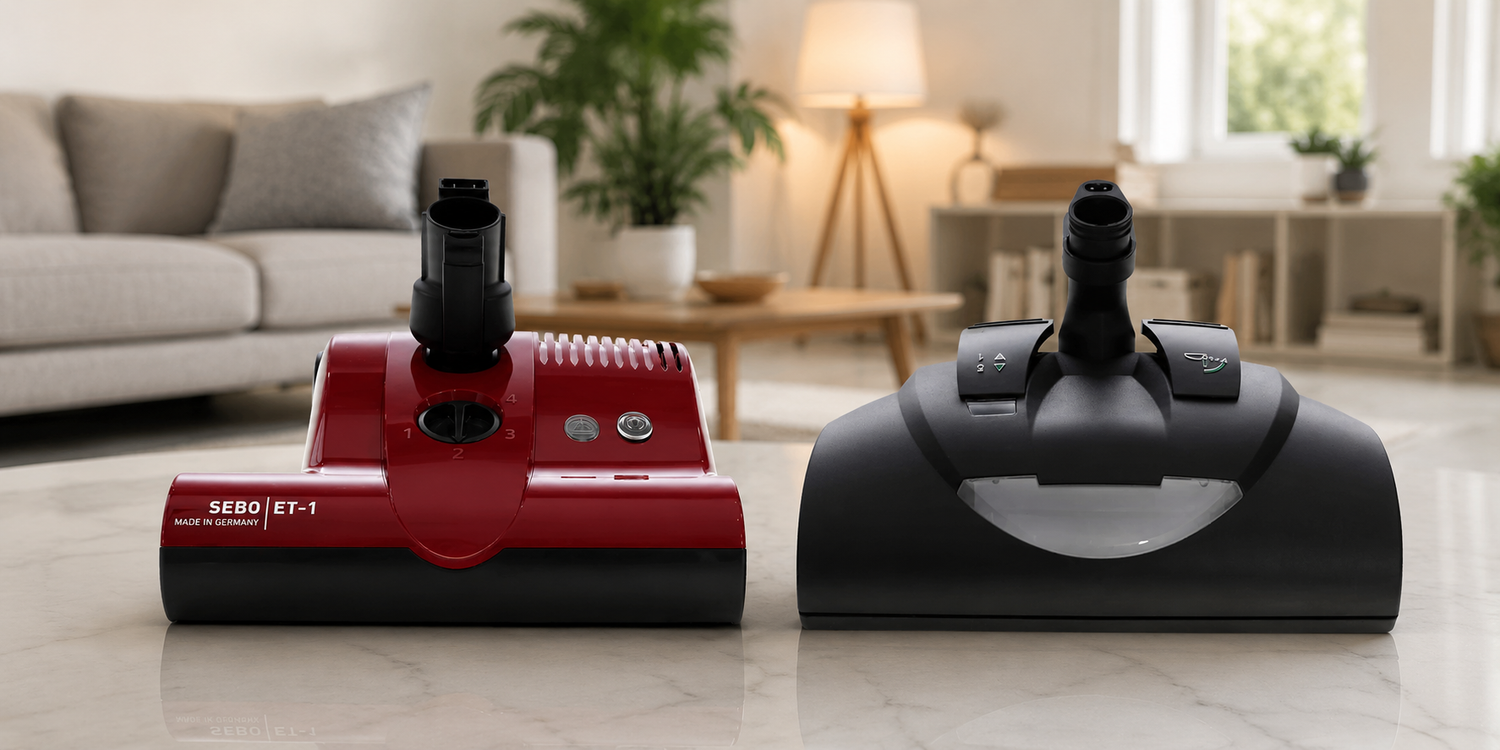
Turbo-style powerheads are the right call for homes with mostly low-pile rugs or light carpeting. They're less powerful than electric models but more than sufficient — and typically more affordable — for basic flooring.
Electric powerheads are the better choice for thick area rugs or wall-to-wall carpeting. Because the beater bar is driven by electricity rather than air pressure, it maintains strong, consistent agitation even on dense pile that would slow a turbo head down.
Direct Connect vs. Pigtail: Which Electric Powerhead Do You Need?
If you go electric, your central vacuum system determines which connection type you need:
- Direct connect — The hose has built-in prongs that plug directly into a port on the inlet, and the central vacuum system itself powers the beater bar.
- Pigtail (corded) — The powerhead has its own separate cord that plugs into a nearby wall outlet, drawing power from your home's electrical system rather than the vacuum system.
Check your existing inlet ports before buying — this determines which of the two you'll need, and the wrong choice simply won't connect.
Key Powerhead Features to Compare
Once you've settled on turbo vs. electric, these features will shape day-to-day performance:
- Height adjustment — Lets you tune the powerhead to your carpet pile. Some models use a self-adjusting floating head, while others require manual setting.
- Roller brush quality — Some brush strips are replaceable individually, extending the life of the head; others require replacing the entire roller.
- Belt type — Choices include poly-V, cogged (geared), and flat (traditional) belts, each with a different expected lifespan and maintenance interval.
- Profile — A low-profile head is essential if you need to clean underneath low furniture without repositioning it.
- Width — Narrower heads (around 10 inches) maneuver tight corners more easily; wider heads (around 14 inches) cover open floor space faster.
- Weight — Lighter powerheads are easier to maneuver over longer cleaning sessions, particularly in larger homes.
What's New in Central Vacuum Powerheads for 2026
- Brushless motor electric powerheads are increasingly available, offering quieter operation and a longer service life than traditional motor designs.
- Self-adjusting floating heads have become more common even in mid-range models, reducing the need for manual height changes between rooms.
- LED headlights built into powerheads now help spot embedded debris in low-light areas like under furniture or in stairwells.
- Pet-specific brush rollers, designed to resist hair wrap-around, have expanded significantly as pet ownership continues to rise.
Turbo vs. Electric Powerhead: Quick Comparison
| Factor | Turbo (Air-Driven) | Electric |
|---|---|---|
| Power source | Suction/airflow | Electrical current |
| Best for | Low-pile rugs, light carpet | Thick rugs, wall-to-wall carpet |
| Cost | Lower | Higher |
| Consistency on thick pile | Limited | Strong |
| Connection options | Suction-only | Direct connect or pigtail |
Frequently Asked Questions
What's the difference between a turbo and an electric central vacuum powerhead? A turbo powerhead is spun by suction/airflow, while an electric powerhead uses electrical current to drive the beater bar, giving it stronger and more consistent performance on thick carpet.
How do I know if I need a direct connect or pigtail powerhead? It depends on your central vacuum system's inlet ports. If your system has a direct-connect port, the hose's prongs plug straight in; if not, you'll need a pigtail powerhead that plugs into a nearby wall outlet.
Do I need an electric powerhead for wall-to-wall carpeting? Generally, yes. Electric powerheads maintain more consistent agitation on dense, wall-to-wall carpet than turbo-style heads, which can lose power on thicker pile.
What size powerhead should I choose? A narrower 10-inch head is easier to maneuver in tight spaces, while a wider 14-inch head covers larger open areas more efficiently. Choose based on your home's layout and furniture density.
How often should I replace the belt on my powerhead? This depends on belt type and usage, but poly-V and cogged belts typically outlast traditional flat belts. Inspect the belt periodically for wear or slipping and replace it at the first sign of reduced brush performance.
Get Expert Help Choosing Your Powerhead
The right powerhead comes down to your carpet type, your central vacuum system's connection type, and the features that matter most for your home. Vacuum Parts Canada carries a wide range of powerheads to suit every budget and need, and our team can help you find the right match. Browse our central vacuum powerhead collection or contact us today for expert recommendations.


Leave a comment
This site is protected by hCaptcha and the hCaptcha Privacy Policy and Terms of Service apply.