Industrial Vacuum Cleaners in Canada: Types, Applications, and How to Choose the Best for Operation
By the Experts at Vacuum Parts Canada
An industrial vacuum cleaner is a heavy-duty dust and debris extraction system engineered for continuous use in commercial and industrial environments—fundamentally different from commercial-grade units in motor capacity, filtration specifications, and duty-cycle ratings. In Canada, selecting the right unit means matching the machine's HEPA or ULPA filtration class to provincial workplace safety standards, its explosion-proof rating to the facility's dust hazard classification (under NFPA 652 and CSA Z1010), and its airflow capacity to the actual particulate load of the workspace.
This guide covers every major category—wet/dry, centralized, pneumatic, and explosion-proof systems—with actionable selection criteria for Canadian facility managers, procurement teams, and maintenance professionals.
What Separates an Industrial Vacuum from a Commercial One
Industrial vacuums are not upgraded commercial units. They are purpose-engineered machines built around three non-negotiable performance axes:
- Continuous duty cycles—industrial motors run 4–24 hours without thermal shutdown
- Filtration integrity—HEPA H13/H14 or ULPA U15/U16 rated, not just "washable filters."
- Ingestion tolerance—designed to handle sharp metal shavings, wet slurry, chemical powders, and abrasive aggregates without damaging internal components
A commercial vacuum fails in an industrial setting not because of brand quality—but because it was never engineered for the load, the material type, or the run time.
The 6 Main Types of Industrial Vacuum Cleaners Used in Canadian Facilities
1. Wet/Dry Industrial Vacuums
Direct Answer: A wet/dry industrial vacuum handles both liquid spills and dry particulate in a single unit. They are the most widely used category across Canadian manufacturing, construction, and food processing facilities due to their versatility and relatively lower acquisition cost.
Best for: machine shops, food processing plants, construction sites, automotive manufacturing
Key specs to evaluate:
- Tank capacity: 20–110 gallons for industrial-grade units
- Motor wattage: 2,000W–6,000W for continuous duty
- Filtration: look for dual-stage with secondary HEPA filter for fine dust
Canadian application note: Facilities in Ontario and BC processing wet slurry or coolant must ensure the vacuum's drain system meets local wastewater pre-treatment requirements before discharge.
2. HEPA Industrial Vacuums
Direct Answer: HEPA industrial vacuums capture 99.97% of particles at 0.3 microns. They are required under Health Canada guidelines and provincial OHS regulations when handling asbestos, lead dust, silica, pharmaceutical compounds, or mold remediation.
When HEPA is mandatory in Canada:
- Asbestos abatement (all provinces—regulated under federal and provincial asbestos regulations)
- Silica dust in construction (Ontario Regulation 213/91, BC Occupational Health and Safety Regulation)
- Lead paint removal projects
- Pharmaceutical API (Active Pharmaceutical Ingredient) handling
- Mold remediation per IICRC S520 standards
What to verify on the spec sheet:
- Filter class: H13 minimum (99.95% efficiency) — H14 for pharmaceutical/cleanroom environments
- Filter bypass protection: sealed system with gasket integrity testing
- Filter change indicator: differential pressure gauge, not just a timer
3. Explosion-Proof (ATEX/CSA-Certified) Industrial Vacuums
Direct Answer: Explosion-proof industrial vacuums are required in facilities where combustible dust or flammable vapors are present. In Canada, this is governed by the CSA C22.1 (Canadian Electrical Code) and NFPA 654, which classify hazardous locations into Zones and Divisions based on ignition risk.
Industries that require explosion-proof units in Canada:
- Grain handling and flour milling (prairie provinces—extremely high combustible dust risk)
- Sawmills and wood processing (BC, Ontario, Quebec)
- Chemical and petrochemical plants (Alberta)
- Lithium battery and EV manufacturing facilities
- Powder coating operations
Critical compliance checkpoints:
- CSA/UL certification for Class I, Division 1 or Class II, Division 1 environments
- Anti-static hose and grounding bonding wire
- Non-sparking aluminum or conductive polyethylene construction
- Motor sealed against dust ingress (IP65 minimum)
Do not substitute: A standard HEPA vacuum—even a high-quality one—is not explosion-proof. Using it in a classified hazardous zone is a direct code violation and a documented cause of industrial fires and explosions in Canada.
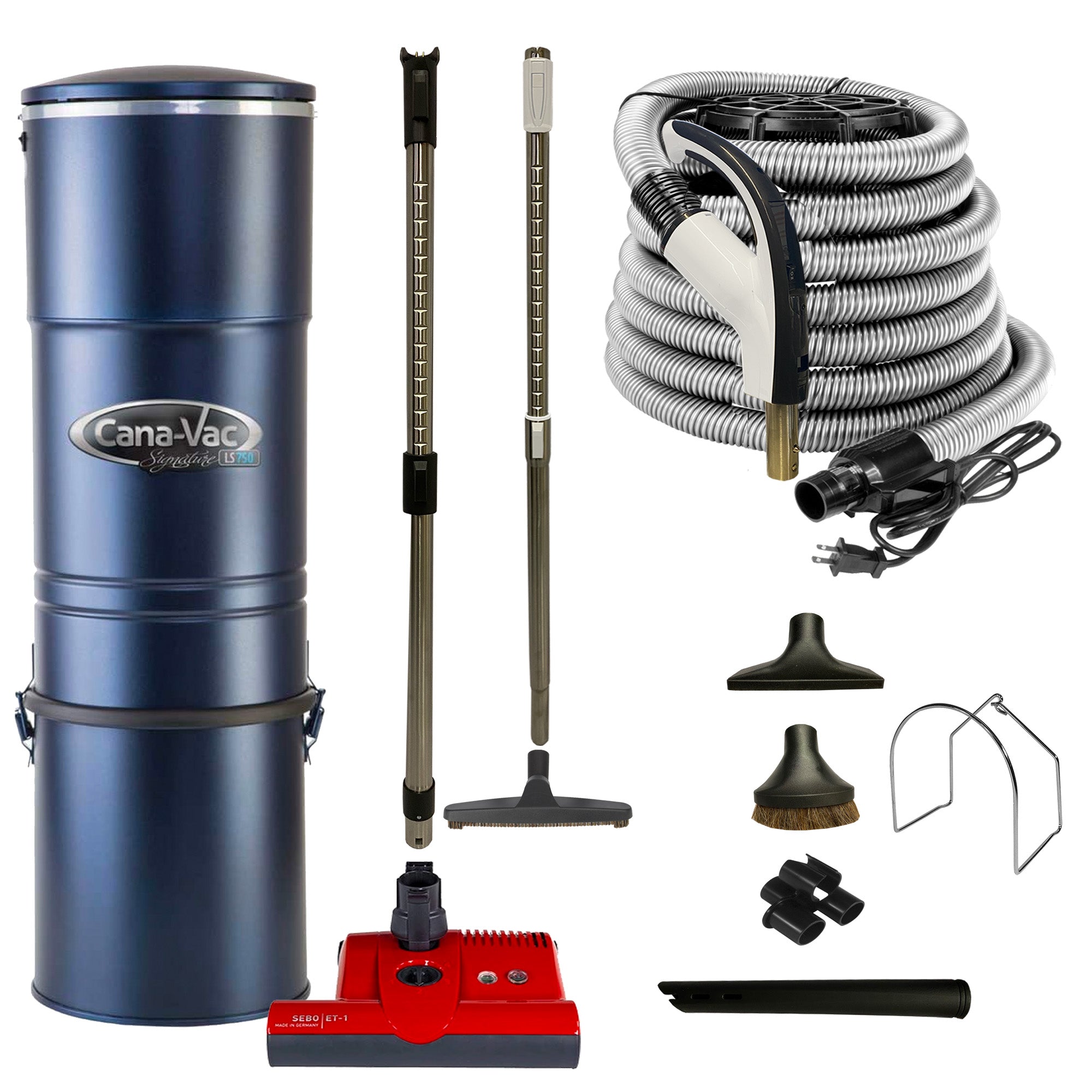
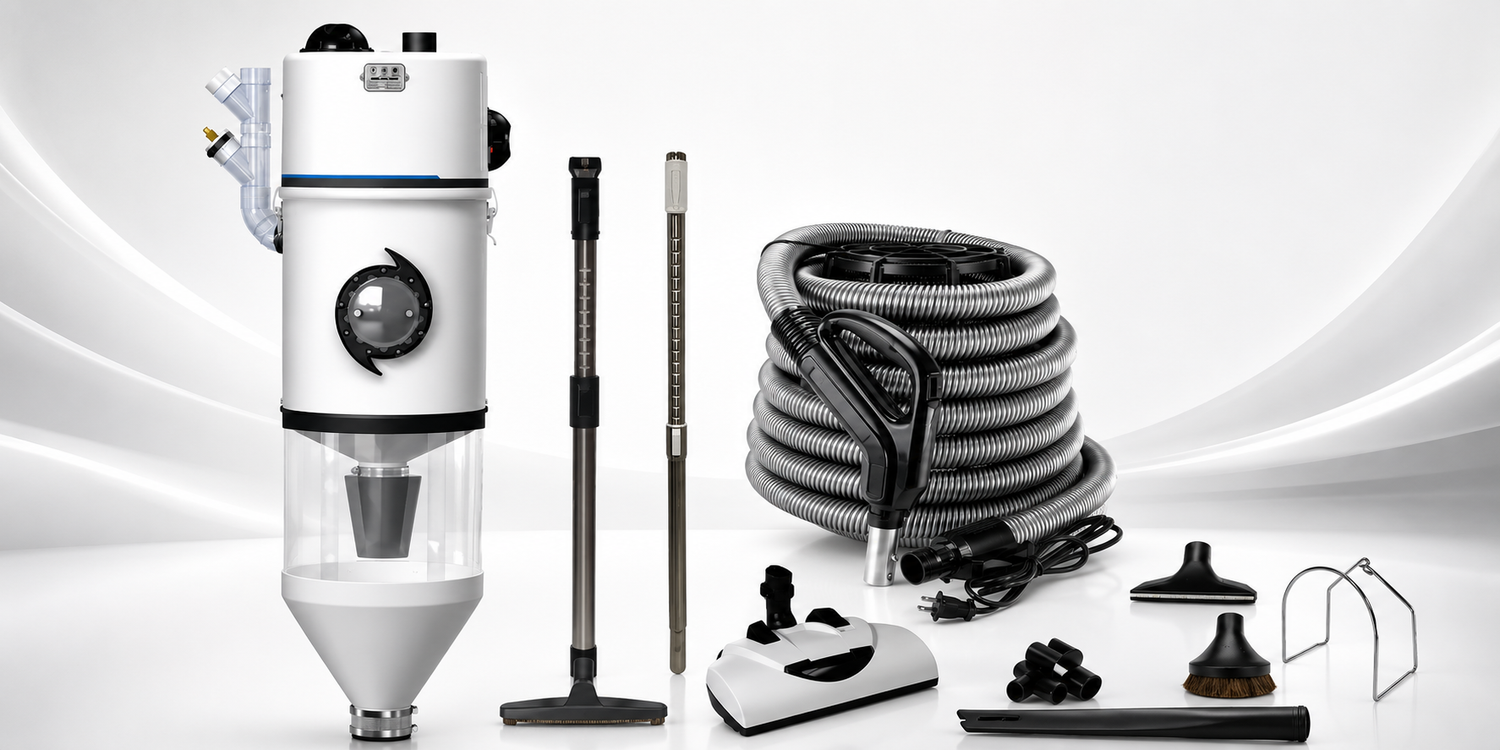
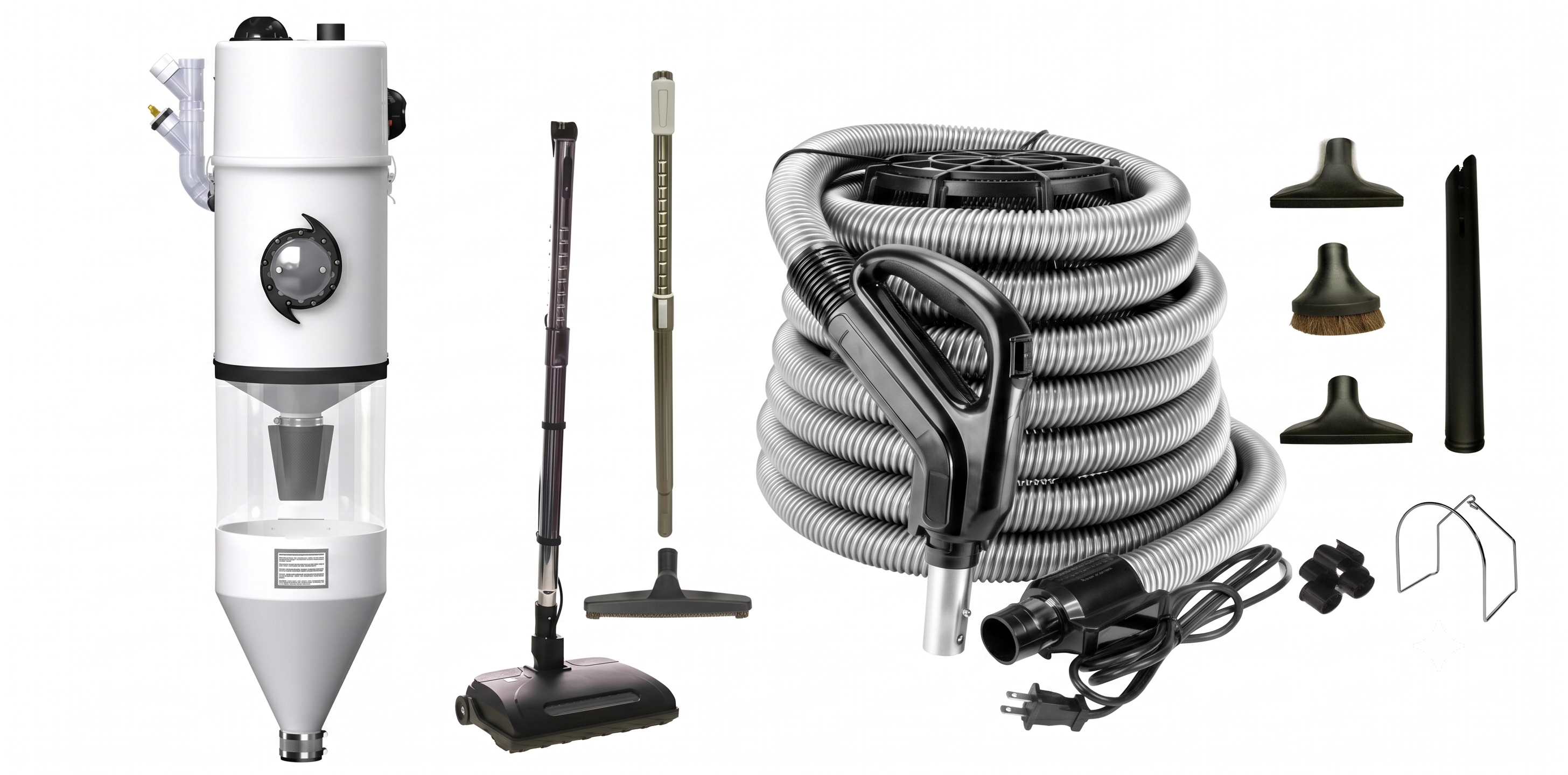
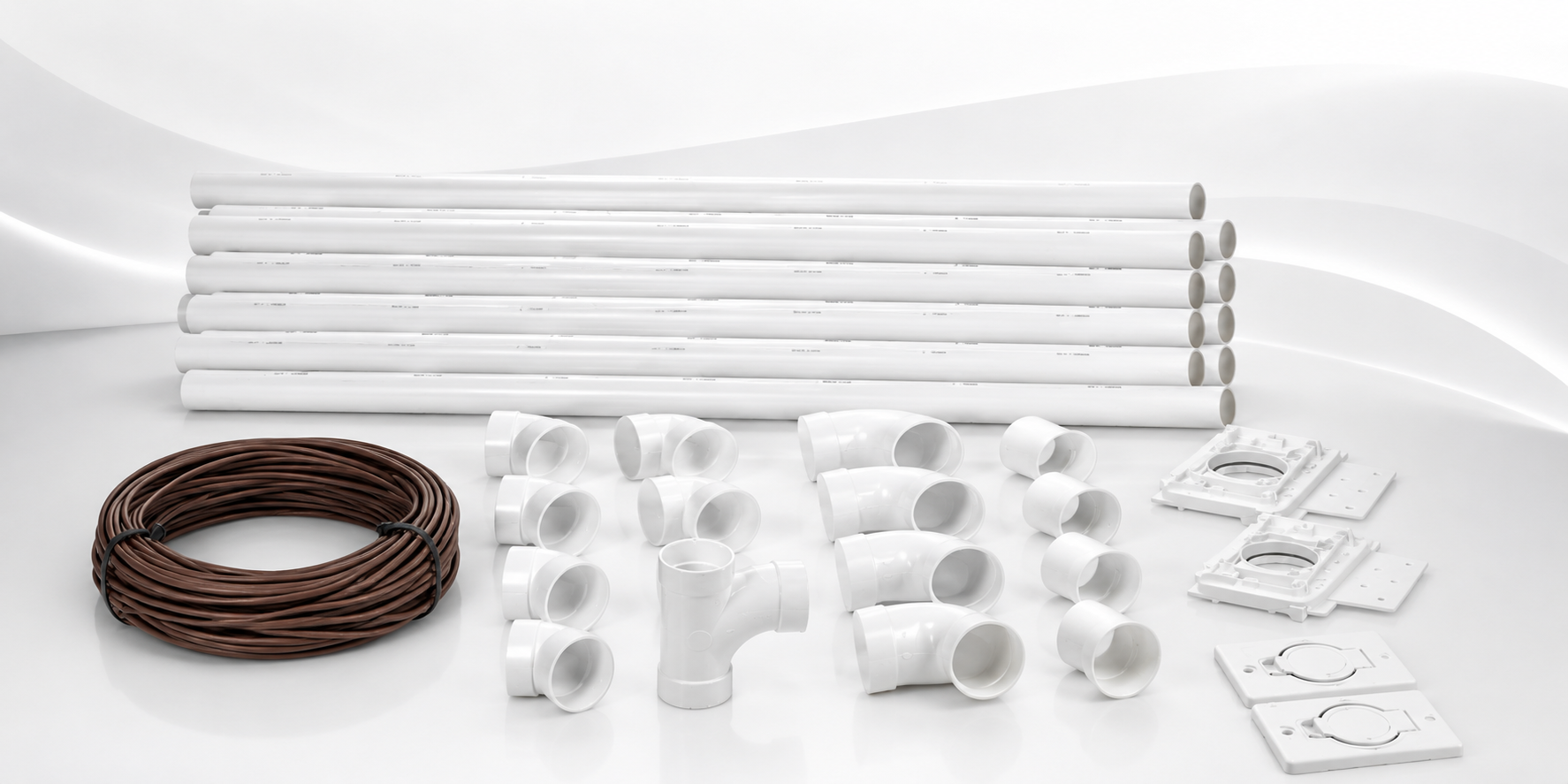
4. Centralized Vacuum Systems
Direct Answer: A centralized (or central) industrial vacuum system uses a single large power unit connected to multiple fixed inlet valves throughout a facility. Operators plug hoses into wall inlets rather than moving a portable unit—dramatically reducing clean-up time in large-footprint operations.
Best for:
- Large manufacturing facilities (100,000+ sq ft)
- Automotive assembly plants
- Hospitals and pharmaceutical manufacturing facilities in Alberta, Ontario, and Quebec
- Multi-floor commercial buildings
ROI consideration for Canadian facilities: Centralized systems have higher upfront costs ($15,000–$80,000+ CAD installed) but typically reduce labor time by 40–60% in facilities with distributed workstations.
Maintenance advantage: One filtration point means one compliance audit point—significantly simpler for ISO 9001 and ISO 14001 certified facilities.
5. Pneumatic (Air-Powered) Industrial Vacuums
Direct Answer: Pneumatic industrial vacuums run on compressed air rather than electricity, making them the only safe vacuuming option in environments with live electrical hazards, submerged applications, or where no electrical infrastructure exists.
Typical applications:
- Underground mining operations (Northern Ontario, BC, Saskatchewan)
- Hazardous material spill response
- Outdoor construction in remote Canadian locations without power access
- Chemical tank cleaning
Spec check:
- Air consumption: typically 40–100 CFM at 90 PSI
- Confirm your facility's compressor capacity before specifying
6. Single-Phase vs. Three-Phase Industrial Vacuums
This is a procurement mistake seen consistently across small-to-mid-size Canadian manufacturers.
- Single-phase (120V/240V): Plug-and-play, lower cost, suitable for lighter industrial duty
- Three-phase (208V/480V): Required for high-continuous-duty motors above 3HP—standard in most Canadian industrial facilities
Verify your facility's electrical panel capacity before purchasing. A three-phase unit shipped to a facility with only single-phase service requires costly electrical upgrades or a transformer—a common and avoidable delay.
How to Choose the Best Industrial Vacuum: A Step-by-Step Framework for Canadian Buyers
Step 1—Classify Your Dust or Material Type
Before looking at any product, answer these questions:
- Is the material combustible? (Check the Safety Data Sheet—SDS—for Kst and Pmax values.)
- Is it hazardous to inhale? (Check exposure limits under Canadian OELs—Occupational Exposure Limits.)
- Is it wet, dry, or a mixture?
- What is the average particle size? (Sub-micron = HEPA mandatory)
This single step determines whether you need a standard, HEPA, or explosion-proof unit—and eliminates roughly 70% of products from consideration immediately.
Step 2—Define Your Duty Cycle
- Intermittent use (under 2 hours/day): Commercial-industrial crossover units may suffice
- Moderate duty (2–6 hours/day): Mid-tier industrial units with thermal overload protection
- Continuous duty (6+ hours/day or 24/7 operations): Three-phase motors, bypass or side-channel blowers, industrial-grade impellers only
Step 3—Calculate Required Airflow (CFM) and Vacuum Lift (Water Lift)
These two metrics determine whether a vacuum can actually pick up the material at the required distance and hose length.
- CFM (Cubic Feet per Minute): Higher = moves more volume. Critical for large debris and long hose runs.
- Water Lift (inches H₂O): Higher = stronger suction for dense or heavy materials.
A common spec error: facilities purchase a high-CFM vacuum for fine powder applications. Fine powder requires high water lift, not high CFM.
Step 4 — Verify Canadian Compliance Requirements
| Requirement | Governing Standard | Province(s) Most Active |
|---|---|---|
| Hazardous dust | NFPA 652 / CSA Z1010 | AB, ON, BC, SK |
| Asbestos abatement | Federal + Provincial OHS | All provinces |
| Electrical classification | CSA C22.1 (CEC) | All provinces |
| Silica exposure | Provincial OHS regs | ON, BC, AB |
| Pharmaceutical GMP | Health Canada GUI-0012 | ON, QC, AB |
Do not rely solely on manufacturer compliance claims. Request the actual third-party certification documents and verify the certification body is recognized by your provincial authority.
Step 5 — Factor in Total Cost of Ownership (TCO), Not Just Purchase Price
The sticker price of an industrial vacuum is typically 30–45% of its 5-year cost. Factor in:
- Replacement filters (HEPA filters: $150–$600 CAD each, replaced every 3–12 months depending on use)
- Replacement bags and consumables
- Motor brush replacement (for universal motor units)
- Service and parts availability in Canada—imported units with no Canadian parts distribution create costly downtime
This is where sourcing replacement parts domestically becomes a direct operational advantage. Facilities across Canada that work with Vacuum Parts Canada avoid the 6–10 week lead times common with overseas parts sourcing.
Industrial Vacuum Maintenance: What Canadian Facilities Get Wrong
Filter Bypass — The Silent Compliance Violation
Filter bypass occurs when a vacuum continues operating with a damaged, improperly seated, or saturated filter. The machine still "works"—but it's exhausting contaminated air back into the facility.
Signs of filter bypass:
- Visible dust exhaust from the machine's output port
- Differential pressure gauge reading zero (no resistance = no filter)
- Increased ambient dust levels despite regular vacuuming
Fix: Implement filter integrity checks at every filter change. For HEPA systems in regulated environments, log the check with the date and technician signature.
Motor Overheating Due to Restricted Airflow
This is the leading cause of premature motor failure in Canadian industrial facilities.
Root causes:
- Filter not changed on schedule
- Incorrect filter installed (too restrictive for the motor's design)
- Hose kinks or attachments creating flow restriction
Prevention: Track vacuum motor temperature during peak use. Most industrial motors should not exceed 80°C at the housing during normal operation.
Using Non-OEM Replacement Parts
Generic bags and filters that don't meet OEM specifications compromise filtration integrity, void warranties, and—in regulated environments—invalidate compliance certifications.
For Canadian facilities requiring certified HEPA filtration, replacement filters must meet the same H13/H14 classification as the original. Verify with your parts supplier that certifications are traceable. Vacuum Parts Canada supplies OEM-equivalent and OEM parts for major industrial vacuum brands with full traceability documentation.
Industrial Vacuum Cleaners by Industry: Canadian Applications Reference
Manufacturing & Metal Fabrication (Ontario, Quebec, Alberta)
- Material: Metal shavings, coolant, grinding dust, oil mist
- Required type: Wet/dry industrial, stainless tank preferred for coolant resistance
- Key spec: Minimum 150 CFM, 90" + water lift, chip catcher pre-separator recommended
Food Processing (Prairie Provinces, BC, Ontario)
- Material: Flour, sugar, spices, product fines
- Required type: HEPA for fine powders; explosion-proof for combustible dust (flour—Kst class St1)
- Key spec: Food-grade materials (FDA/NSF-compliant stainless tanks and hoses), CIP-compatible designs preferred
Construction & Demolition (Nationwide)
- Material: Silica dust, concrete, drywall, asbestos (in pre-1990 structures)
- Required type: HEPA mandatory for silica and asbestos
- Key spec: High portability, durable housing, onboard tool power outlets for connected dust extraction
Pharmaceutical & Life Sciences (Ontario, Quebec, Alberta)
- Material: API powders, excipients, potent compounds
- Required type: HEPA H14 or ULPA, full containment, validated to Health Canada GMP standards
- Key spec: Validated cleaning procedures, no dead legs in the collection system, IQ/OQ/PQ documentation available from manufacturer
Mining & Resource Extraction (Northern Ontario, BC, Saskatchewan, Alberta)
- Material: Rock dust, silica, coal dust, ore fines
- Required type: Pneumatic or explosion-proof electric; anti-static rated
- Key spec: Certified for underground use; CSA Class II, Division 1
Where to Buy Industrial Vacuum Parts and Replacement Filters in Canada
Sourcing replacement parts locally is not just a convenience issue—it's an operational continuity decision. A vacuum out of service waiting for overseas parts can cost a Canadian facility $500–$5,000+ per day in lost productivity, depending on the application.
Vacuum Parts Canada supplies replacement filters, motors, hoses, bags, and accessories for industrial vacuum systems across Canada—with faster lead times than international distributors and technical support to ensure the right part is ordered the first time.
What to look for in a Canadian parts supplier:
- OEM-traceable documentation for HEPA-grade components
- Cross-reference capability (match parts from discontinued or rebranded units)
- Technical support staff with industrial vacuum service experience—not just order processing
- Stocked inventory in Canada (not drop-shipped from US or offshore warehouses)
Frequently Asked Questions: Industrial Vacuum Cleaners in Canada
Q: What is the difference between HEPA and ULPA filtration in industrial vacuums? HEPA H13 filters capture 99.95% of particles at 0.3 microns. ULPA U15 captures 99.9995% of particles at 0.12 microns. ULPA is required for pharmaceutical cleanroom applications and certain nuclear facility environments. For most Canadian industrial applications, HEPA H13 or H14 is sufficient and more cost-effective to maintain.
Q: Are explosion-proof vacuums required for grain handling facilities in Saskatchewan and Alberta? Yes. Grain dust is a Class II combustible dust. Under the CSA C22.1 Canadian Electrical Code and NFPA 61 (Prevention of Fires and Dust Explosions in Agricultural and Food Processing Facilities), grain handling facilities must use CSA-certified explosion-proof electrical equipment, including vacuums in classified hazardous locations.
Q: How often should industrial vacuum filters be replaced in Canadian facilities? Replacement frequency depends on the material being collected and the duty cycle. As a baseline, HEPA filters in heavy-use environments should be inspected every 30–60 days and replaced when differential pressure exceeds the manufacturer's limit—typically every 3–6 months. Facilities handling fine pharmaceutical powders may need monthly replacement. Track filter life by hours of operation, not calendar time.
Q: Can I use a shop vacuum for industrial applications in a Canadian workplace? Not in regulated environments. Shop vacuums are not rated for continuous duty, do not carry certified HEPA filtration, and are not explosion-proof. Using a shop vacuum where an industrial unit is required creates direct OHS liability. Provincial labour inspectors in Ontario, BC, and Alberta actively cite this as a compliance deficiency during facility audits.
Industrial Vacuum Selection Checklist for Canadian Facilities
- [Material classified (combustible, hazardous, wet/dry, particle size)
- Duty cycle defined (intermittent, moderate, continuous)
- CFM and water lift calculated for application and hose length
- Canadian compliance requirements verified (NFPA, CSA, OHS provincial regs)
- Electrical supply confirmed (single-phase vs. three-phase)
- Total cost of ownership calculated (filters, bags, motor brushes, service)
- Canadian parts availability confirmed with supplier
- Filter certification documentation obtained and filed
Need replacement filters, motors, or accessories for your industrial vacuum? Vacuum Parts Canada supplies OEM and OEM-equivalent parts for industrial vacuum systems across Canada — w—withadian inventory, fast shipping, and technical support.
Visit vacuumpartscanada.ca or contact our team to cross-reference your model and confirm part availability.

Leave a comment
This site is protected by hCaptcha and the hCaptcha Privacy Policy and Terms of Service apply.